I still think the most striking example of Switch 2’s offbeat new mouse JoyCon arrives in the regrettably titled Bravely Default Flying Fairy HD Remaster. If you’ve been following me since my last stop at VG247, you’ve probably come across this angle already, but I believe it’s worth repeating: the strongest showcase for the new hardware doesn’t come from the Switch 2 Welcome Tour or from games such as Drag x Drive. Instead, it’s delivered through a re-release of a 14-year-old 3DS game. Yes, honestly.
Let me spell it out a bit. Square Enix’s Switch 2 RPG remaster includes two fresh minigames that make direct use of the two JoyCon 2 units and their mouse functionality. One is a rhythm game where you steer your chosen character through a sequence that feels inspired by Theatrhythm and Persona Dancing All Night. The other is a completely ridiculous airship minigame, where the characters help the self-proclaimed hero, Ringabel, as he tries to steer his ship through a chaotic aerial obstacle course.
As far as I can tell, the rhythm-action minigame stands out because it effectively asks you to use two JoyCon mice to guide, click, and “dance” your way through. The airship game is a little less distinctive, but it’s still fun, weird in the right way, and a welcome extra on top of an already excellent RPG.
So why bring this up here? Because the team behind the title clearly has a real knack for building these kinds of add-on-style experiences, and its upcoming (and once again, poorly named) The Adventures of Elliot: The Millennium Tales suggests that even a strong role-playing game can be boosted by one or two minigames. I could point to Final Fantasy 8’s Triple Triad, Yakuza 0’s Cabaret Club, Suikoden 2’s cooking minigame, or basically any casino activity in Dragon Quest to make the case. And if we’re listing examples, don’t forget: any fishing minigame ever—except Stardew Valley.
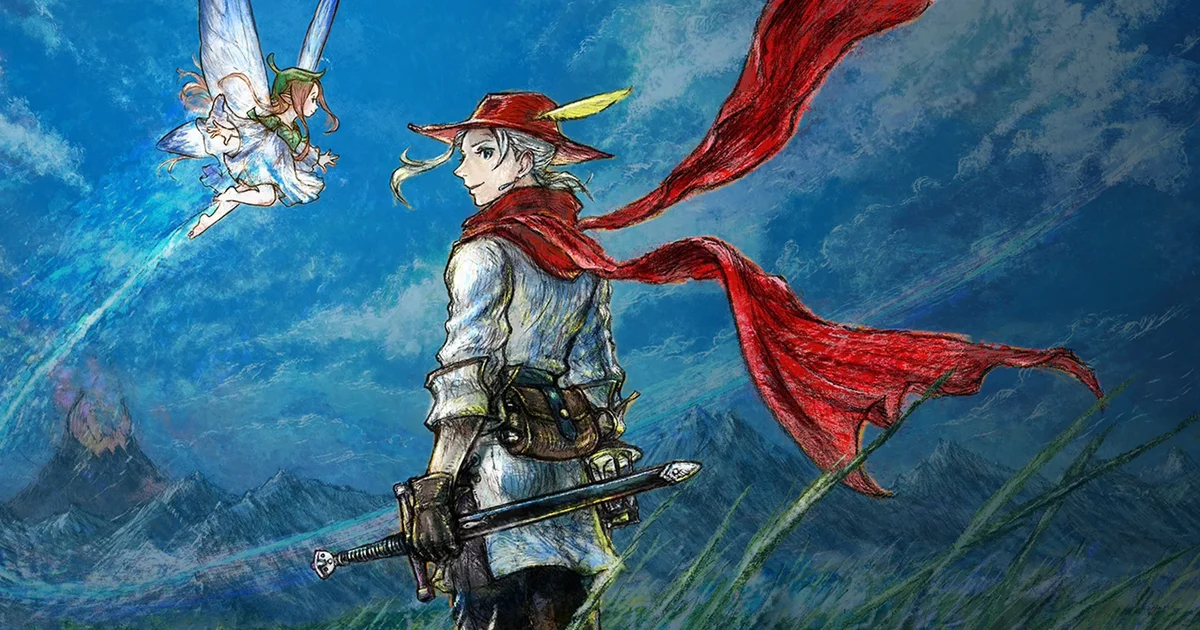
Either way, The Adventures of Elliot is Square Enix’s take on classic Zelda. A roaming swordsman with a fairy buddy? You can almost predict what happens. Still, it’s hard not to notice the details: the top-down view, the pot-throwing, the cracked walls you can break through with bombs, the grass you can—and are encouraged to—cut down, the gems that make up the different currencies, and the “drop” container health display. Elliot doesn’t just borrow from these influences; it carries them like tattoos. That said, it doesn’t have to be a drawback—at least not based on the two-hour demo I played. The game also feels promising on the whole: the world is broad, you get a satisfying level of freedom, and it has a warm, approachable personality that should feel familiar to anyone who’s tried the Octopath series (the same studio made both). As a bonus, there’s a Chrono Trigger-like time travel mechanic, though I barely had time to dig into it during my run—still, I’ve been told it’s meaningful and plays an important role in the story.
The fairy sidekick I mentioned, Faie, can learn new abilities. There are five you unlock as you move through the main game, from a teleport option that lets you pop in at different points on the screen—which comes in handy both during fights and while exploring—to a powerful sprint that strengthens your melee attack and helps close the distance on far-off enemies before they can land hits. Then there’s “Ignite,” which lets you harm and weaken foes, whether you’re dealing with a single target or taking on groups.

These systems give the developers a chance to support the adventure with a string of challenges and bonus areas designed to test what you’ve learned with each new skill. Usually, you handle the controls by steering Elliot with one thumbstick (or mouse JoyCon) while Faie is controlled by the other. Honestly, there are moments where it can start to feel like Geometry Wars at its most demanding. But it isn’t across the world map and combat where these abilities really get pushed to their most delightful extremes—it’s in the minigames.
Sure enough. Each ability comes with its own minigame (and there appear to be five altogether). Teleport has you jumping between islands, dodging obstacles, and grabbing pebbles as you race the clock and tension steadily rises. Ignite’s matching challenge is a rhythm-action, reflex-driven test. Sprint plays like a chase sequence with Crash Bandicoot vibes, and it ramps up the longer you manage to keep going. There are five ranked reward tiers, and apparently there’s even a concealed ladder of ranks that goes all the way to SSS—so, there you go, Devil May Cry. And what do you earn for finishing these bonus challenges? Music, naturally. If you clear them, you unlock small vinyl-style discs with portions of the soundtrack, plus some mostly inconsequential back-and-forth flavor text between Elliot and Faie when you leave the menu.
But that’s not really what matters most to me. Sure, it’s nice to earn rewards, yet there’s something extra satisfying about seeing a whole screen filled with sparkling “SSS rank” prizes in the matching menu tabs. If you’re chasing tangible loot, though, the game sprinkles in even more minigames and activities around the world. The most noticeable is probably the “Find the Cats!” quest, which triggers some genuinely funny lines from NPCs—like, “There are still 48 cats out there, and 12 more in this era!” Thanks, Ailurophilic Traveller, for turning my downtime of time-travel and cat-collecting into something even better. Per the Traveller’s reward page, discovering 50 cats grants you the “Medal of the Katzenmeister,” a Golden Egg that raises currency gain by 100 percent, along with special weapons and more. Very typical for RPGs, but also incredibly tempting (no pun intended) for a certain brand of completionist goblin.
The Bravely Default series, the Octopath Traveler series, and now Elliot are all guided by director Tomaya Asano, whose team inside Square Enix’s Creative Business Unit II is called Team Asano. It really seems like the group appreciates the tradition and history of minigames within RPGs, and understands that no matter how captivating the main gameplay loop is, it often benefits from a little extra seasoning; a touch of sauce to go with the steak. I’m glad to see this—especially in an industry that’s increasingly focused on cutting back—since Asano continues to make room for something that might be considered non-essential, yet ends up feeling genuinely important: the classic minigame.