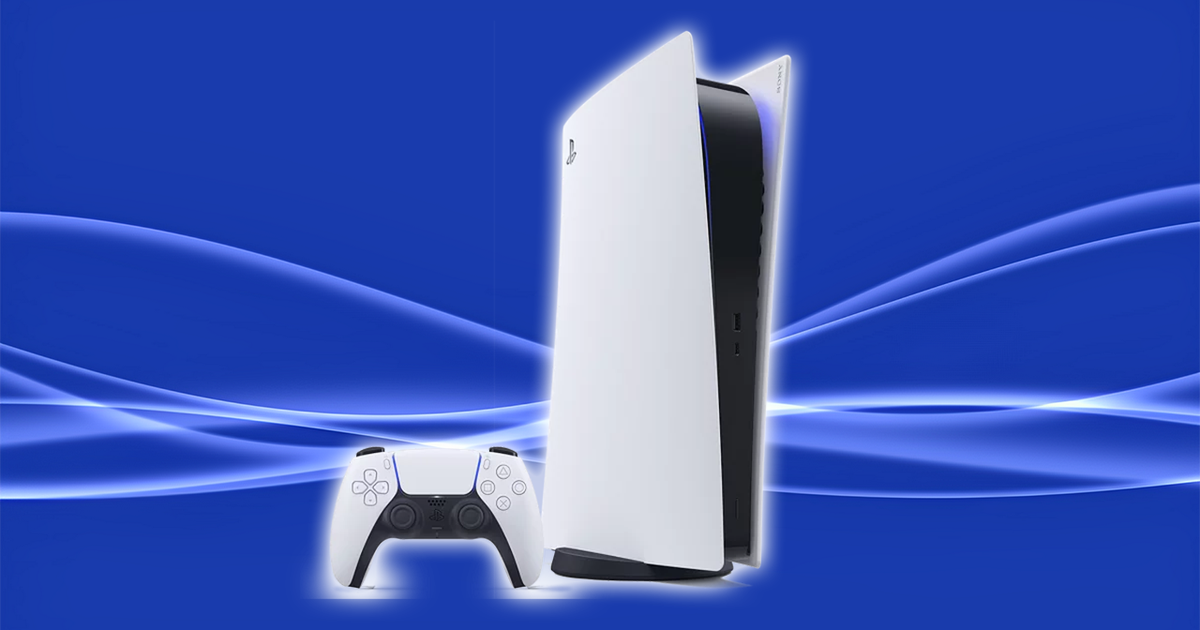
Earlier in May, Sony released its fiscal year report covering the previous twelve months. Sandwiched between the usual, somewhat dry financial details, it delivered an eye-opening look at the wider economic hurdles the PlayStation platform holder is facing—along with the direction it intends to take. Importantly, all of this is presented as a preview to the next wave of console hardware.
On top of that, a companion briefing from CEO Hiroki Totoki highlighted Sony’s strong curiosity about AI. The message suggested the firm is prepared to work with the technology in some form, even while it admits the generative AI wave is weighing on console sales.
To unpack Sony’s major business updates, Eurogamer spoke with Rhys Elliot, a video game analyst at Alinea Analytics, about what these numbers and corporate remarks mean for the industry leader—and what they could mean for you.
The RAM shortage problem: lower PS5 sales, possibly higher prices?
To start, let’s talk about AI. In its fiscal reporting, Sony said it expects PS5 hardware sales to slip because of an AI-linked memory shortage. The question is how much impact a hardware decline would realistically have on the company.
Elliot frames it this way: “Larger than the segment-level figures suggest, yet smaller than critical.” He adds that since the PS5 is now in its sixth year on the market and has a sizeable install base, revenue from software, services, and network operations should help keep the overall momentum moving in a positive direction.
Still, this should not be dismissed as insignificant for Sony. Totoki’s own outlook indicates that hardware constraints could last through 2027. He isn’t alone—other CEOs and industry figures are also aligned that AI-driven shortages won’t ease overnight. “Sony’s response, as mentioned in the report, is to base FY26 PS5 sales on the memory volume it can acquire at reasonable costs and ‘flexibly adapt’ unit sales and promotional strategies,” Elliot says. In other words, Elliot believes it points to Sony being “ready to produce fewer consoles” rather than “taking on” the increased manufacturing expenses. If these pressures continue, it could even mean Sony raises prices again.
That said, Elliot notes a factor that could reshape expectations for Sony. “The major topic is GTA 6. PlayStation holds the lead marketing position, and historically, Sony captures about two-thirds of the multiplatform GTA install bases.” If GTA 6 arrives in 2026, as it’s still expected, the PS5 might outperform Sony’s cautious projections—but Elliot believes Sony’s strategy is dependent on third-party releases, which is “not the ideal position for a platform holder.”
Next-gen delays and fewer PS6 exclusives—yet bigger PS5 releases?
The report also suggested that the 2026 operating outlook should remain mostly steady, largely due to investments directed at the next generation of consoles. I asked Elliot how memory shortages might affect that coming era, and he compared it to the type of hardware difficulties Sony faced during the PS5’s early days.
“Totoki explicitly stated that they have not yet determined PS6 timing. This is much more open-ended than the FY25 results suggested,” Elliot remarked. “It appears that timing and price points are genuinely under consideration. The memory shortages are part of that. It’s ironic, as we experienced semiconductor shortages during the PS5 launch.
In practice, Elliot believes these hardware constraints could spill over into game publishing plans. Sony’s main first-party studios, for example, may be more inclined to release upcoming games on PS5 rather than wait for PS6. “Naughty Dog, Insomniac, and Santa Monica’s next projects will likely launch cross-gen rather than as PS6 exclusives. Given the diminishing returns from new hardware these days — and the influx of new PS5 users thanks to GTA 6 — it’s not as substantial an issue as it was for the PS4-to-PS5 transition,” Elliot comments.
Elliot also suggests Sony has taken lessons from the semiconductor problems that complicated the PS5 launch, and is now better prepared for a rougher start. “A 2028 launch window offers the hardware team another 12 to 18 months for memory costs to stabilize. The semiconductor shortages during the PS5’s rollout genuinely impeded that generation’s initial three years of momentum, and Sony has clearly learned from that experience.” As a result, he argues that a delayed-but-managed release could be preferable to a “constrained launch,” especially since “Xbox is no longer a direct rival.”
What might Sony’s CEO have meant by “changing business models”?
Returning to Sony, Totoki also said the company could consider “changing business models,” particularly when promoting the next PlayStation generation with these realities in mind. Looking ahead, Elliot pointed to two main routes Sony might pursue:
The first centers on hardware financing or subscription-style arrangements: “Sony covers the BOM – bill of materials, pardon my analyst jargon – upfront,” Elliot explained. “Then the consumer pays over 24-36 months. Microsoft has tested this with Xbox All Access. Apple offers a similar model for iPhones. This shifts the affordability dilemma from “Can you pay $700 today?” to “Can you afford $25 per month?”
A second possibility, in Elliot’s view, is for Sony to mirror Xbox’s approach by offering multiple hardware tiers at launch: “A premium PS6 at standard pricing alongside a lower-spec version at a significantly lower price point. Essentially, something akin to the Xbox Series S situation. This is the simplest model change to implement.” He also suggested Sony’s rumored portable device could fit into a similar two-level strategy.
As for broader strategic shifts, Elliot also points to two notable developments that could push Sony toward change: difficulties in executing its live service plans, and the growing appetite for games in China in recent years.
Between Bungie’s $765 million impairment loss, the Concord setback, and Marathon’s underwhelming reception, it’s clear Sony has had trouble building a strong Western live-service lineup. For Elliot, Helldivers 2 is a clearer model to follow than Bungie. The key question now is whether Sony will keep pushing forward in-house—or instead lean more on partnerships and licensing.
China adds another layer. Stellar Blade moved 2.3 million copies on Steam, with 45 percent of its audience coming from China—a region where PS5 hardware is currently structurally out of reach. It’s worth noting that although you can buy a PS5 in China, it’s limited to a specific selection of approved games. At the same time, Chinese users can obtain unrestricted PS5 units to play titles like Stellar Blade, and they’ve been doing so in large numbers. Elliot argues that Sony hasn’t yet rolled out Chinese localization and regional pricing for its first-party PC port, calling it an “untapped opportunity” and “strategic oversight” for the company.
What is Sony truly doing
with AI?
Sony also revealed a collaboration with Bandai Namco Holdings tied to an AI and next-generation technology initiative. Elliot characterizes himself as cautious about generative AI, relative to what analysts typically expect, and views the announcement as another step in the wider business relationship between the two companies.
To Elliot, this essentially builds on the 2025 partnership between Sony and Bandai. Beyond elements like “intellectual property expansion” and “joint content production,” the agreement covered what Sony described as “jointly developing and operating technologies and services related to entertainment.” Elliot believes this AI pilot update is connected to that effort.
The speed at which the partnership was made public suggests to Elliot that it’s a major focus for both sides. Even so, he adds, “A more skeptical reading is that the message was tailored to more unpredictable shareholders—people who hear ‘generative AI,’ get overly excited, and start investing impulsively.”
Still, Elliot points to a number of less-discussed elements in Sony’s AI strategy. One is the $700 million in revenue coming from AI-powered payment processing, which helps speed up transactions and lower costs. He highlights this as a meaningful gain for Sony, independent of how one views ongoing questions around consistency and intellectual property. There’s also the PSSR note—similar to Nvidia’s DLSS in that it uses AI to boost texture detail to a higher resolution without adding extra load to the GPU.
“I’ve tried Saros and Ghost of Yotei on my Pro, and it works extremely well,” Elliot said. “Machine learning has become critical for first-party visual quality. Look at the AI ghost patent—an AI assistant designed to help players who are stuck in games—that was announced earlier this year, and the direction is clear.”
At the same time, expect Sony to keep moving forward with a limited, careful rollout of AI features. Elliot believes Sony will talk about its consumer AI plans and services well before they become truly usable, saying, “Expect public updates to stay measured for as long as the AI keeps producing results without controversy.”
“The contrast between what Sony says in public and what it’s genuinely putting money into is deliberate. It’s building AI capabilities while avoiding the public-relations backlash of openly admitting it—remember what happened with Sven Vinke?”
How’s PlayStation doing overall?
In the end, there are a few broad takeaways we can draw from Sony’s major disclosure. Overall, PlayStation seems well-positioned—especially when compared with Xbox—though there are still some noteworthy issues that deserve attention.
“Sony’s gaming division is profitable, established, and clearly in the middle of a shift,” Elliot concludes. “The headline numbers are genuinely strong, and the FY26 projections suggest that leadership expects margin growth to continue as we move into the later stage.” Put simply, key investors are likely to feel that Sony can keep pushing forward successfully, even with the PS5’s age considered.
While PS5 hardware sales are trending down faster than Sony would likely prefer—and have now fallen just slightly behind the PS4—Elliot thinks GTA 6 could reverse that outcome if there’s enough console inventory. Right now, PS5 has sold 93.7 million units in total, which is only a little behind where the PS4 was at the same point, despite the PS5’s higher launch price and pandemic-era supply limits.
Elliot also says Helldivers 2’s day-and-date PC release has worked well “for the right kind of title.” He points to Stellar Blade as another case showing how regional pricing and localization helped open up the Chinese market—although that advantage may not matter now after the recent report that Sony plans to return to console-only releases for its major first-party games. HBO’s adaptations such as The Last of Us also help soften the risk of weakening returns on what an investor might label “legacy IP,” and the Bandai-Sony collaboration shows a willingness to explore spaces where other companies may not be present.
“Looking at the bigger picture, Sony is the stronger of the two console makers right now,” Elliot states, contrasting Sony with Microsoft. “It has a platform business that’s maturing and continuing to improve margins, it has one of the strongest active first-party lineups in the industry, and it still has substantial, untapped opportunity in China (I think Steam is a major factor there).”
What will matter most in the years ahead, Elliot says, is whether Sony’s momentum can stay intact going into the PS6 launch—or whether a tough memory shortage and problems with live-service execution could disrupt its plans.
“In the best-case scenario, Sony nails everything. The worst-case scenario depends on several problems hitting at the same time: GTA 6 slipping to 2027, live-service failures, and memory costs rising beyond current forecasts. Each one is possible. It’s unlikely all three would happen together, but if they did, it could turn a transition into a headache.”
If all three events occurred at once, it would likely create difficulties for players too.