Hardly any game features a story as disorderly as that of 1666: Amsterdam. This is the vision that Patrice Désilets – the original director behind the Assassin’s Creed franchise – pressed at Ubisoft. The title had been in development, in one way or another, for 13 years before Ubisoft decided to pause 1666 (it was still called something else at the time), place Désilets on suspension, and eventually face a legal battle that he won three years later. Désilets has shown a long-standing desire to bring this game to life.
Still, his first priority was to build a fresh studio, Panache Digital, and prepare for what came next by working on something else first: Ancestors: The Humankind Odyssey. That game was uneven but memorable, focusing on evolution and moving players from the age of primates to early humans, with million-year gaps in between—an idea I hadn’t come across before. “Ancestors is ambitious, unwieldy, and not particularly enjoyable – yet it’s often subtly thought-provoking too,” Christian Donlan wrote in our review of Ancestors: The Humankind Odyssey.
During that stretch, Désilets continued to tease 1666: Amsterdam, sharing glimpses and hints about its original direction, including prototypes and early descriptions. In 2016, he described it as a game about being “worse than the devil,” showing footage recorded two years earlier. The clip featured a raven gliding above old Amsterdam before cutting to a lone figure in a dark robe and hat standing at the front of a canal boat, drifting through a thriving city full of life. Inside Ubisoft, the project was reportedly being talked about as the next Assassin’s Creed. It felt grim, unsettling, and—honestly—hard to resist.
Then, in 2019, after Ancestors launched, Désilets confirmed he was finally pushing ahead with 1666: Amsterdam. “I want to create a game about the Devil,” he told me at a conference in Canada. And now, seven years later, at the opening showcase of Summer Game Fest 2026, that ambition has materialized. 1666: Amsterdam has been officially confirmed for an early access release later this year, complete with a prologue you can play right away. A long-awaited win—though maybe not for long?
No sooner had the prologue gone live than people started spotting unmistakable signs that generative AI had played a role—both in the visuals and in the marketing materials—prompting a wave of criticism. Panache Digital responded with an apology, saying: “We acknowledge this oversight and apologize for any distress caused,” adding, “Rest assured, the Early Access and complete game will not include any AI-generated assets.”
On top of that, 1666: Amsterdam’s standing has taken another hit from the “Mixed” reactions the prologue received on Steam, where many players said they were unsure what kind of game this actually is—even after playing it. I felt that same uncertainty after my own try.
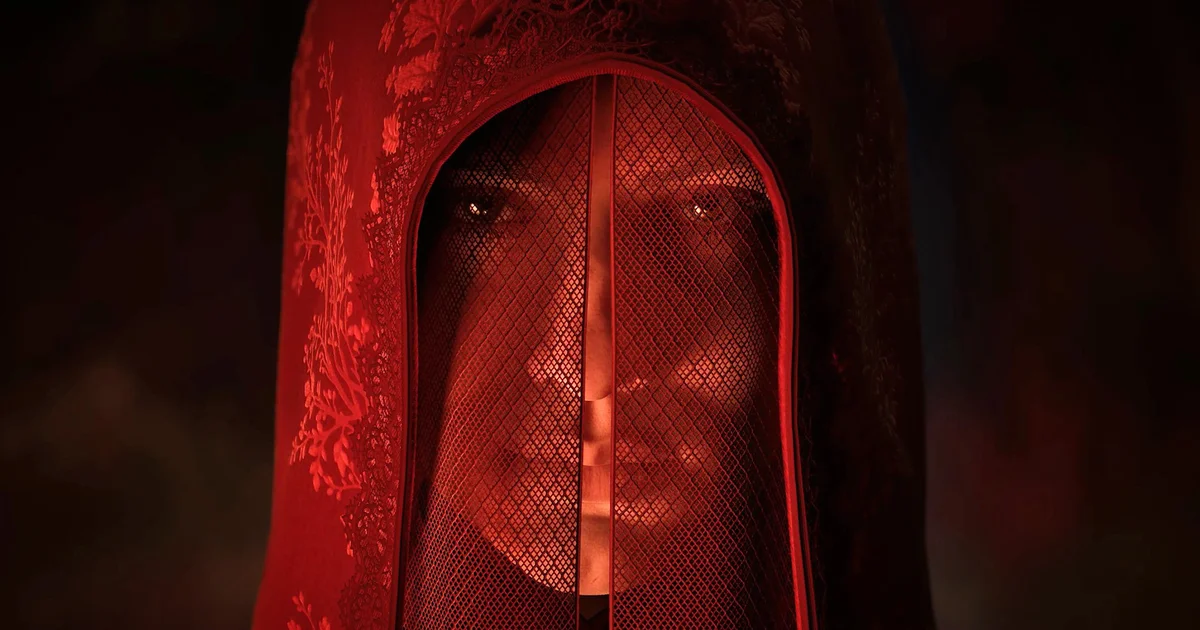
The prologue demo for 1666: Amsterdam is split into three sections, matching the three eras the full game will move through: 1666, 1999, and the present day. In 1666, you take control of the witch-like character Noa, who appears in the trailer, as she approaches a massive tree to carry out a ritual. Noa is a Collector, a particularly gifted individual, and in the demo you use her talents by focusing on objects to interact with them—here, lighting torches and braziers. Despite hints at combat in the trailer, there’s none in this segment. Instead, you simply walk toward the towering tree while the scene intermittently glitches and shakes, exposing a threatening, disruptive presence—before you offer up an animal, interact with its entrails, and have a cat jump into your arms. Then the timeline changes.

A collection of images I captured in the 1666: Amsterdam Prologue.
Next, we shift into the present day, stepping into a huge, elegant university library. You play as a young female student who wants to meet her professor about an unusual letter she’s uncovered, one connected to her family’s mysterious past. The professor seems to know more than he’s willing to say. There’s a short sequence in which you’re asked to locate specific items around the library, meaning you’ll need to use a map. As clues emerge and the letter is decoded, your link to the past becomes clear. The timeline shifts again.
Then it’s 1999. Here, you follow two young lovers on New Year’s Eve—the night before the Millennium—as they stroll along Amsterdam’s Amstel River, making their way toward a hotel filled with partygoers. You shadow them down the halls as they head to their room.
The man in this section is the father of the university student you controlled just moments earlier, and you experience the events outlined in the decrypted letter, with lines hovering in front of you to guide your route through the hotel. As you keep moving, you learn that the woman you’re with is tied to the witch-like cult seen at the beginning of the game. In her room, she’s arranged a ritual, complete with mirrors positioned around the bed. During their intimate moment, the ritual begins—then the room starts to warp and shift; the timelines converge and later break apart, pulling you back to the opening once more.
However, it’s a very narrow and controlled segment of gameplay, making it quite challenging to discern what the foundation of 1666: Amsterdam will be
This time, you take the role of the cat, effectively placing a human consciousness into a cat that explores the world we saw at the beginning of the prologue. You move through the space, leaping over fallen branches, until you reach the ritual under the tree and climb it—before leaping into Noa’s welcoming embrace. The cat from the start: in a sense, that was you. Noa greets you and holds you close as the demo ends.
It’s intriguing. In terms of creativity, it’s bold—daring, even—to try stitching timelines together in this way; it specifically brings me back to the modern-day Animus sequences from the original Assassin’s Creed. Pulling together a coherent experience across different periods without one era swallowing the others is a tough balancing act—but a fascinating one all the same. And tying it to dark witchcraft, thematically, I’m fully on board.
That said, this is a very limited, tightly guided slice of gameplay, which makes it harder to understand what the real mechanics of 1666: Amsterdam will involve—and how much freedom you’ll have to move through this world.
An announcement press release framed 1666: Amsterdam as a third-person, story-led action-adventure, with “Noa using witchcraft to expose beings hiding behind human appearances.” Still, what does that mean for how we’ll actually play—will we spend most of our time in Noa’s 1666 period, or will the experience stretch beyond that? And in practice, how does combat work? How do we uncover these “entities”? Is the game pointing toward a specific investigative process? The press release does talk about “investigate by day” and “confront your demons at night,” yet based on this quick preview, it’s hard to pin down what those promises really translate to. Is this a calculated hook meant to spark curiosity—especially since the game’s wishlists really have jumped—or is it leading somewhere else entirely?
Maybe the confusion comes from the sort of attraction it offers—something we’re not used to seeing in games. This isn’t just a demo; it feels more like a playable teaser designed to establish a mood, which may require us to adjust how we usually judge what we’re getting. The atmosphere, though, is undeniably strong. 1666: Amsterdam stood out among the SGF trailer wave because it doesn’t take place in a time period or location we encounter very often, and I genuinely appreciate that. Désilets clearly has a knack for presenting a concept from a fresh angle, and he’s using an original approach to do it.
That said, when you get a closer look in actual gameplay—away from a pre-rendered trailer—the experience doesn’t hit as hard. From my perspective, the visuals feel a bit dated, and the slice shown in the demo comes across as fairly constrained in its layout. There’s little sense of freedom, and you can’t really go wherever you’d like—only where the game allows. Is there a wider world waiting to be explored, and if so, how large is it? It does a solid job delivering atmosphere and tone, but it still feels like we shouldn’t expect an Assassin’s Creed, regardless of what it once aspired to be. This is a project built by 70 people, not by ten times that number, and it shows.
Some oddness can be charming—I usually value creativity more than polish—but I’m uneasy about what that might mean so near the release of 1666: Amsterdam. Sure, early access titles aren’t finished products, but I don’t remember running into many narrative-driven action-adventures like this during early access before (unless you count Baldur’s Gate 3, which is a completely different type of RPG). These don’t typically fit the profile of “system-heavy” games that would benefit from a large pool of testers—unless testing isn’t the true goal here, and instead the purpose is to generate extra revenue or draw in a publishing partner. If that’s the reality, it leaves me worried: how much of the game is actually completed? And what state is 1666: Amsterdam truly in right now?
I should add that I’m genuinely happy to see 1666: Amsterdam move forward as a concept after all this time. I’m also glad that its tone—and its ambition to approach things a little differently—still appears intact. For the moment, though, I’m left with plenty of questions. What happened, for instance, to the “worse than the devil” idea? I hope my worries don’t hold up. I hope every uncertainty gets swept away as we follow a story tied to the river Amstel. What began as a turbulent development road has returned with a bit of turbulence of its own. Let’s hope the early access release brings calmer waters.