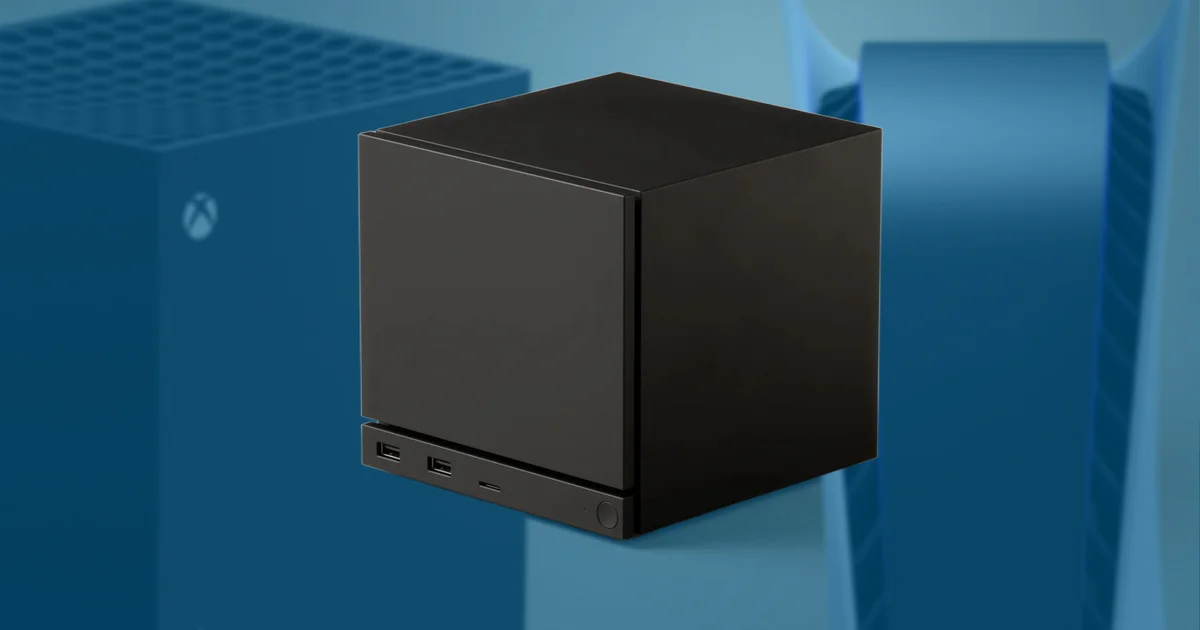
With Valve stepping into the living-room gaming space—an area usually ruled by consoles—through its latest Steam Machine, the company invites comparisons not only to the consoles already in that space, but also to the wider business strategies used by firms such as Sony, Microsoft, and Nintendo.
One clear example is subsidisation. Since consoles first appeared, the Sonys, Microsofts, and Nintendos of the industry have frequently offered them at prices that leave little room for meaningful profit. They use this approach—subsidising—to draw in buyers, building a steady audience they can later monetise through game sales as well as subscription offerings.
Given all that, it makes sense for shoppers to wonder whether a successful company like Valve might take a similar route with the Steam Machine. Instead, it has chosen not to. From today’s pricing announcement, it’s clear Valve intends to skip subsidisation and frame its decision as “freedom,” at least in its own terms.
“While [subsidisation] may look like an easy answer,” Valve said in a press release, “it doesn’t line up with how we believe strong ecosystems take shape. At Valve, we’re driven by the idea that open systems, in the end, benefit us—and our customers—more.”
“When companies price their hardware below cost to gain an edge, or secure exclusive content for it, they’re aiming to build a tighter, more closed system—one where you can’t choose the software you’d rather use,” Valve added. “We don’t want that for PC hardware, and we think you shouldn’t want it either.”
“A PC is a PC: the moment you start confining things to specific SKUs or particular models, it’s not truly a PC any longer” -Lawrence Yang
It’s a direct point, and I followed up with Valve in an interview ahead of today’s pricing announcement, curious whether subsidisation ever came up. “It does get mentioned in discussion,” interface designer Lawrence Yang told me, “but it always comes back to what we’re really trying to achieve and our perspective on PCs and open systems.”
“As outlined in the blog, it’s often the case that when hardware is subsidised—or when exclusives lock users into a certain platform—the goal is to funnel [consumers] into that particular environment. That isn’t what we believe. We feel that if someone buys a game, they ought to be able to run it on any PC. And a PC is a PC: once you begin limiting things to particular SKUs or set models, it stops being a PC in the way we see it. Any idea of subsidising content or hardware goes against that.”
Still, since you can’t play Steam games anywhere except Steam, isn’t that essentially the same issue? “You could make that argument,” Yang conceded, “but at the same time, we aren’t locking down the hardware. You can install Windows, and you can bring in other game stores on the Steam Deck or Steam Machine. We work actively to make that possible. We don’t think people should feel confined to just one game store.”

For now, Valve’s Steam Machine is a costly—but relatively distinctive—choice for the living room: a compact PC created to work like a console while still giving you access to Steam’s huge library. But what changes when Microsoft’s next-generation Xbox Project Helix shows up? Xbox leader Asha Sharma says it will be a hybrid device that merges PC and console characteristics, and that it will “lead in performance and support your Xbox and PC games.”
It’s unclear whether Sharma is suggesting Project Helix will allow games outside the Xbox ecosystem. Still, it’s reasonable to expect it will be subsidised by Microsoft. If that’s the case, Project Helix could end up as a more capable—and possibly cheaper—option than the Steam Machine once it finally lands. The question is whether Valve sees that as a threat.
“Steam Machine is simply one more method for people to enjoy their games. The greater the variety, the better. Hence, from our viewpoint, Project Helix is a positive development for gamers” -Yazan Aldehayyat
When I asked engineer Yazan Aldehayyat, his answer was measured and relaxed. “We stand for choice,” he said, “so the more options people have, the better. That’s the same message we shared earlier: Steam Machine is just another route for users to play their games. The more ways there are to choose, the better. From our perspective, Project Helix is a good thing for gamers. And if it brings yet another option with different performance levels or experiences, that would be great.”
What effect the Steam Machine will have on the living-room console market is still unknown. Even so, I expect the steep pricing—something Valve hadn’t initially planned for—will likely hold it back to some degree. Still, Valve may not view the Steam Machine as a move into the console market in the first place, at least not in an explicit way. “We don’t really frame it in those terms,” Yang remarked.
“‘Console’ can mean different things to different people. We’re simply trying to help people experience their games in more ways and have more fun. We think producing hardware is one way we can serve our customers better and make Steam available in more places. The living room is one of those places.”
Valve’s 512GB Steam Machine base model is listed at £879, and adding a Steam Controller—which we’ve found enjoyable to use—raises the total to £938. The 2TB Steam Machine costs £1,149, and bundling it with a Steam Controller brings it to £1,428. There’s also a reservation system for placing an order, with Valve expected to begin shipping Steam Machines later this month, though supply is limited. But is it a worthwhile purchase? Chris has spent this week weighing the Steam Machine, trying to answer that question.