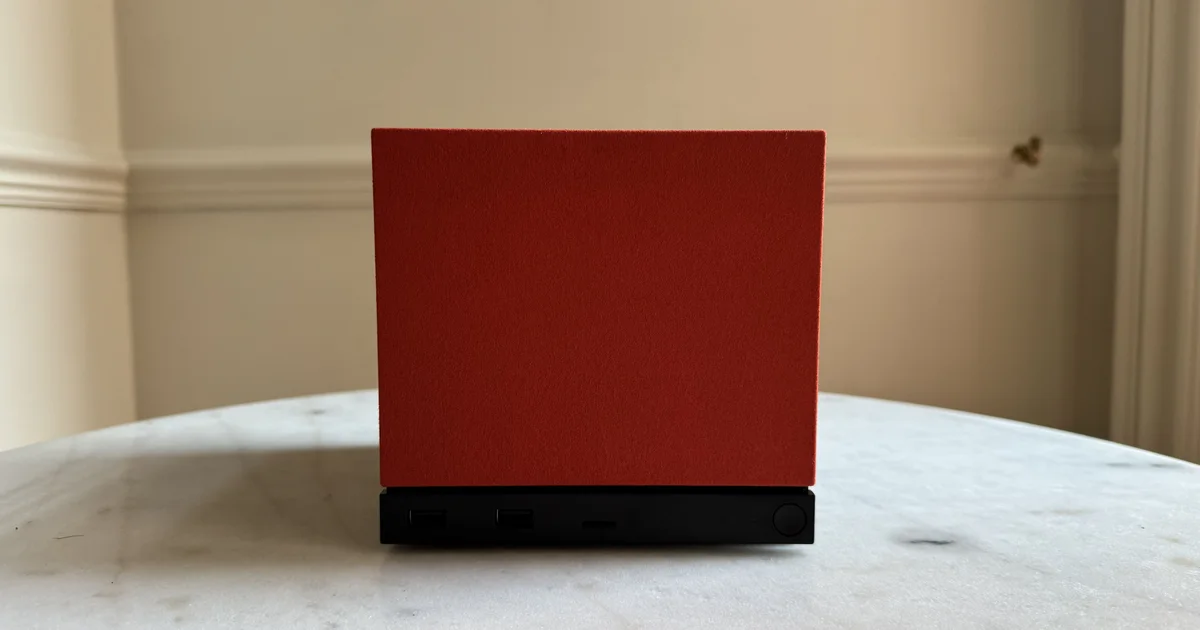
With the various details Valve shared about the Steam Machine in hand—especially as it prepares to start shipping via a reservation rollout in the near future—it’s worth shifting focus to what comes next. Valve has now officially confirmed that FSR 4, AMD’s latest and most capable image upscaling solution, will be included with the Steam Machine.
If you’re not familiar with the concept, upscaling is a practical way to boost game performance on compatible systems. Most current titles offer some form of upscaling, and Nvidia’s DLSS is often the most common choice. Much like DLSS, FSR works by taking an image rendered at a lower resolution and reconstructing it at a higher one, helping to reduce the strain on your hardware.
Even though we still don’t have a confirmed timetable for when Steam Machines will support AMD’s newest technology, the news is exciting for a few clear reasons. FSR 4 delivers image quality comparable to Nvidia’s DLSS 4. At the same time, DLSS doesn’t run on AMD-based hardware, so Steam Machine owners would otherwise have been stuck with older, less capable versions of FSR. Now that Valve’s newest device is set to support FSR 4 directly, it points to broader game compatibility.
Despite being far stronger than a Steam Deck, the Steam Machine still has relatively restrained specifications, where every bit of power really matters. Strong upscaling support should translate into better performance for today’s toughest games, and it could also help extend the system’s usefulness for future releases.
“We anticipate customers will enjoy a much higher quality graphical experience when employing FSR 4.1 for upscaling,” Valve told Eurogamer. “AMD is expanding support for additional devices, including Steam Machines.”
Until now, FSR 4 was limited to the newest wave of AMD GPUs, RDNA 4. More recently, however, AMD announced that it’s bringing support to older GPU generations like RDNA 3—and even RDNA 2. Since the Steam Machine’s graphics chip is based on RDNA 3, everything lines up nicely.
That said, a few key details are still missing. FSR 4 uses a more intricate algorithm to produce its results, and that could affect Steam Machine performance depending on how the feature is handled. For the moment, details are limited, so we’ll need to wait for additional information from Valve.
Valve hasn’t officially provided a release date for FSR 4 support on Steam Machines, but it’s possible it could arrive within the next few weeks. AMD has indicated a July window for bringing the technology to its RDNA 3 GPUs, which makes it reasonable to expect Steam Machines won’t fall too far behind.
If you’re interested in what our experience with the Steam Machine has been like, you can read Chris’ in-depth review. And if that discussion has made you consider picking one up, we’ve also put together a detailed pre-order guide to help you navigate a process that isn’t exactly straightforward. There’s more, too: if you have technical questions about the Steam Machine, we have answers, along with our conversations with Valve about why the hardware wasn’t subsidized and how it was originally meant to cost “considerably” less.