I’m genuinely glad whenever Capcom decides to take creative chances. Given how many franchises and memorable characters it already has, it’s fair to say there’s not a huge push for Capcom to reinvent itself. Most of the time, it already has what it needs to keep those corporate profit numbers moving upward. Still, from time to time the studio steps into less explored territory—and, backed by the success of its established franchises, it can deliver truly impressive results.
My favorite Capcom reinvention, without question, is Dead Rising. It’s worth remembering that Dead Rising ever saw the light of day at all—after establishing a hit zombie franchise, Capcom had little reason to try another. Yet it did, and by setting itself apart from Resident Evil, it produced something mechanically striking. I can easily picture Pragmata aiming for that same kind of impact. In spirit it feels closer to Dead Rising than Exoprimal.
After what felt like an eternity stuck in development limbo, Pragmata has finally arrived as a third-person sci-fi shooter. You play as a man in a spacesuit (Hugh) moving through the world as he destroys androids and solves environmental challenges to make progress. It’s certainly entertaining, but it also overlaps with plenty of other games, which makes it clear there has to be something unexpected—and Pragmata’s twist is a welcome one.
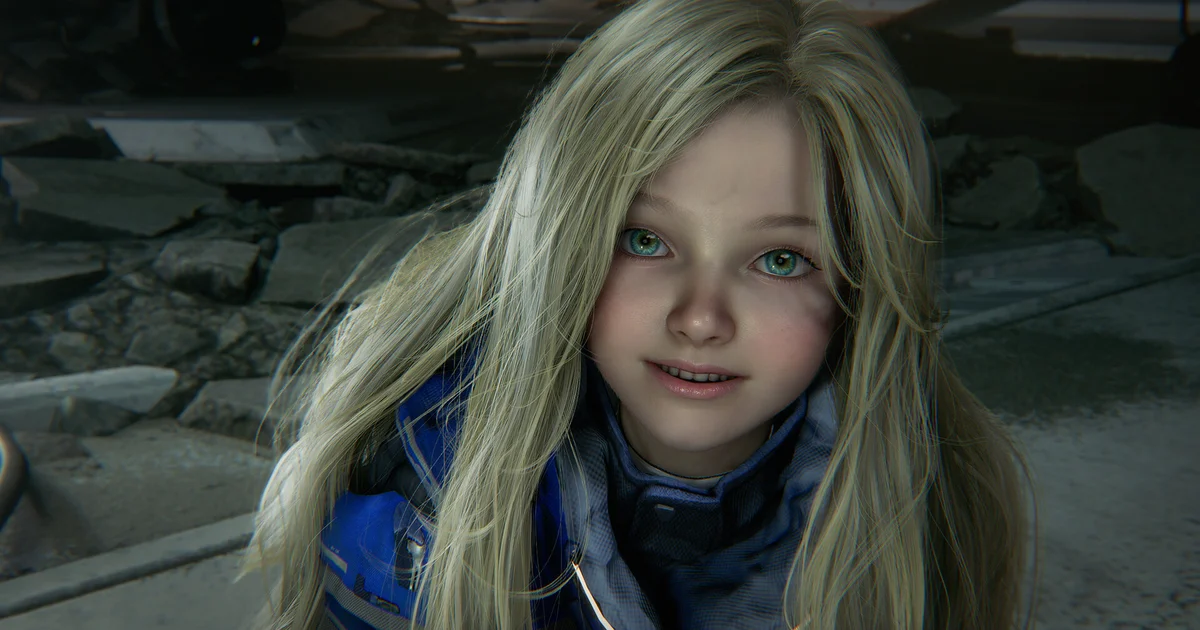
At its core, the game plays like a puzzle title. In a 20-minute hands-on preview, the enemy robots I ran into seemed to have a kind of barrier that makes bullets useless. That’s where Pragmata’s young companion, Diana—who, naturally, is also an android—steps in.
Hit the left trigger to lock onto the robot, and a sliding block puzzle pops up along the right side of the screen. You’ll need to use the controller inputs to quickly work through a maze and disable the robot’s shields. Sometimes it’s as simple as moving an icon from point A to point B, while other times you’ll find extra goals tucked somewhere along the route. If you successfully complete the hack by hitting key moments, you may unlock a damage boost for when you begin firing.
Just as importantly, the hacking process doesn’t stop or slow down the action. Combat continues in real time, so you might have to dodge during a hack—or even walk away from it partway through if the fight turns against you. That juggling act is the heart of the challenge.

Once those shields come down, you’re free to tear into the robot. A clear rhythm emerges: hack while staying clear of incoming blows, then move in and shoot.
I sometimes find hacking mini-games in RPGs or shooters tiring, but Pragmata is where it clicks. I enjoyed hacking here, and I found it both easy to grasp and genuinely demanding to juggle with the rest of third-person combat. When you’re dealing with two or three foes at once, you have to act fast and choose carefully—do you focus on one hack first? Would it be better to neutralize every enemy before you start shooting, or take them out individually?
It’s all about multitasking. Players are asked to control two characters at the same time, each bringing its own abilities. I find that approach compelling, and honestly it helps explain why Pragmata took so long to reach a playable state. I can imagine Capcom needed multiple rounds of refinement to make moving between hacking and shooting feel fluid while you manage both Hugh and Diana—at least, that’s exactly how it felt in the portion I played.
The tone shifts across locations. I catch shades of God of War, The Last of Us, and other deeply melancholy stories in the dynamic between Hugh and Diana. A few of the visuals also bring to mind the spirit of Lost Planet. Even though the feel is quite different on a technical level, the inventive gameplay ideas certainly bring Dead Rising to mind. The whole premise of hacking robots to expose weaknesses even made me briefly consider a realistic Mega Man reboot—an odd comparison, but one I welcomed.
As you can probably tell, I genuinely see plenty of promise here. That said, it’s also true that a 20-minute showcase focused on a small group of enemies doesn’t fully test the idea. The system could easily end up feeling repetitive and reduce to a gimmick. Capcom will have to show more if it wants to prove this mechanic can scale up effectively. Still, as an underlying concept, it already leaves me extremely curious about how far it can evolve. We’ll know more when Pragmata releases in 2026.