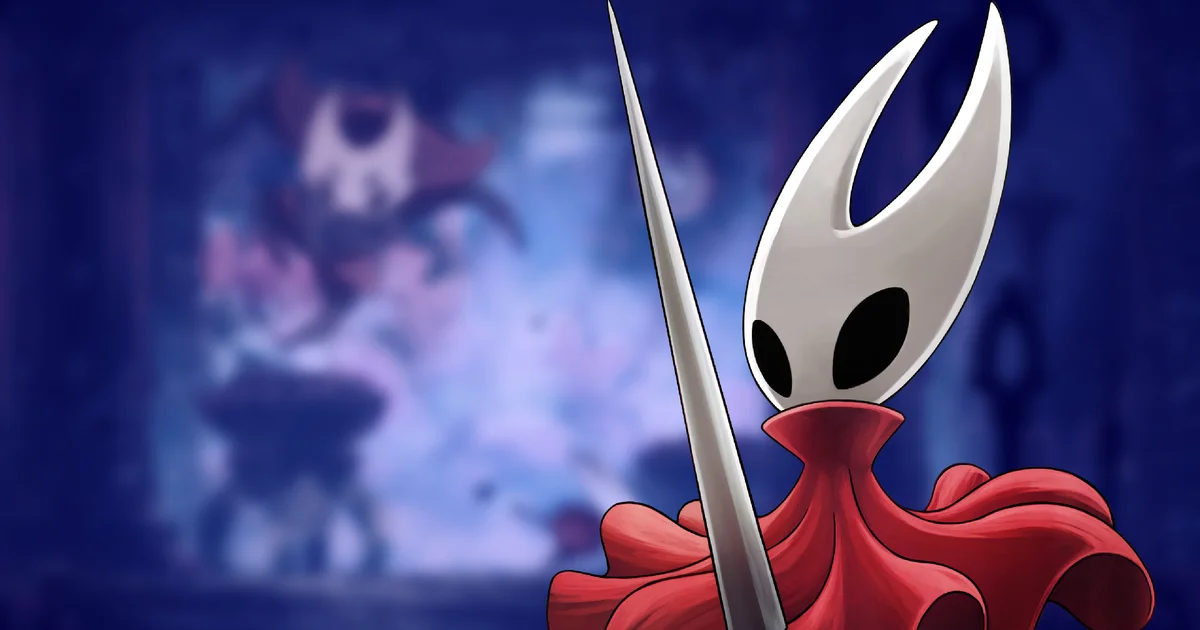
Hornets are often seen as a nuisance because of how boldly they behave. Their stings can be more dangerous than those of bees, and overall, they’re typically classed among the most ruthless insects out there. In fact, their stings can prove deadly (about 62 deaths each year in the US are linked to hornets on their own). So it’s only natural that you might want one to take center stage as the hero of a video game.
I got a short look at Silksong during Gamescom—actually the first chance the public has had to play it since 2019. Not only did the press try the same demo, but the enthusiastic crowds did too—and one detail stood out above everything else: this game feels tougher than Hollow Knight.
To me, that’s genuinely exciting. Hollow Knight had a distinctive difficulty curve. Most of the main adventure felt relatively direct and linear for an action platformer, with the pressure gradually building as you neared the finale—then it surged hard in the DLC and the content that came after. At first, Silksong appears to be following a similar trajectory. That’s a big part of what makes it so compelling.
For reference, the Gamescom demo features two stages: an easier one early on, and a harder one nearer the end. As a Metroidvania fan, I was immediately drawn to the tougher option. You can tell right away that things have changed: Hornet moves differently than the Knight did in the earlier game. She seems more buoyant, and her attacks reach farther than before. Her upward strike also looks a bit quicker, which makes it easier to dispatch airborne enemies if you line yourself up well, while her side attacks feel slightly slower.

That said, the biggest shift I noticed is tied directly to the dash and jump system. Instead of the (in)famous pogo jump from Hollow Knight—where hitting downward during a jump sends you shooting straight up—Hornet uses a dive kick. It’s a downward diagonal attack. You can’t just keep bouncing off enemies’ heads (a tactic that worked extremely well in the original) without careful positioning and a solid grasp of how the movement plays out. This caught me off guard during a boss fight with a smug little bug named Lace, who wields a needle. I tried my usual pogo approach, only for Lace to shut it down with her own counter and a parry. Yeah—oops.
Next up, the dash. Unlike the previous game—where it mainly meant sliding left and right while relying on invincibility frames to avoid damage—Hornet builds momentum in a more involved way, in line with her combat feel from the 2017 title. That creates a distinctive kind of spacing when you dash horizontally, and because you naturally flow into a run immediately after dashing, you end up more exposed than you were in Hollow Knight. Dashing also changes your jump animation, carrying you diagonally with that momentum. For exploration, it can act like a helpful “slide dash” tool, but in fights it tends to throw off your positioning and pace in a big way.
When I played Hollow Knight, I went at the Knight like a fast but fairly straightforward fighter—moving in clean lines, landing heavy damage, and staying sharp with anticipation and counters. Hornet, though, leans into a far more fluid style. She plays more like a chess bishop, drifting around at awkward angles and moving diagonally, and she seems much stronger while she’s in motion rather than planted in one spot. I’ve logged more than 200 hours in Hollow Knight across multiple platforms, but within just 10 minutes of Silksong, my instincts started to shift.
This feels like a step in the right direction. I’m happy to see these differences. In the first game, there’s an NPC you meet before your very first fight with Hornet who says: “I have spotted this nimble little creature. I thought her prey and leaped at her, but with a flicker she stabbed me with her flying stinger and darted away. Could she be… a Hunter?” It could make for an intriguing tagline for her as a playable character in Silksong. Like a true hornet, her aerial assaults and relentless pursuit look like among her most powerful options. I’m eager to uncover how her various abilities and tactics work as she continues pushing back against the eerie threats creeping through the wide world of Silksong.
I’ve been waiting for years—years!—to finally get to play this game, and I walked away from the demo both impressed and curious. Silksong is the game everyone’s talking about. And Team Cherry has decided to make it tougher and a bit more involved. For platforming fans like me, that’s hard to resist—but will the typical player who’s only casually familiar with the series feel the same way?
We won’t have to wait much longer to learn. Silksong is scheduled to launch later this year.