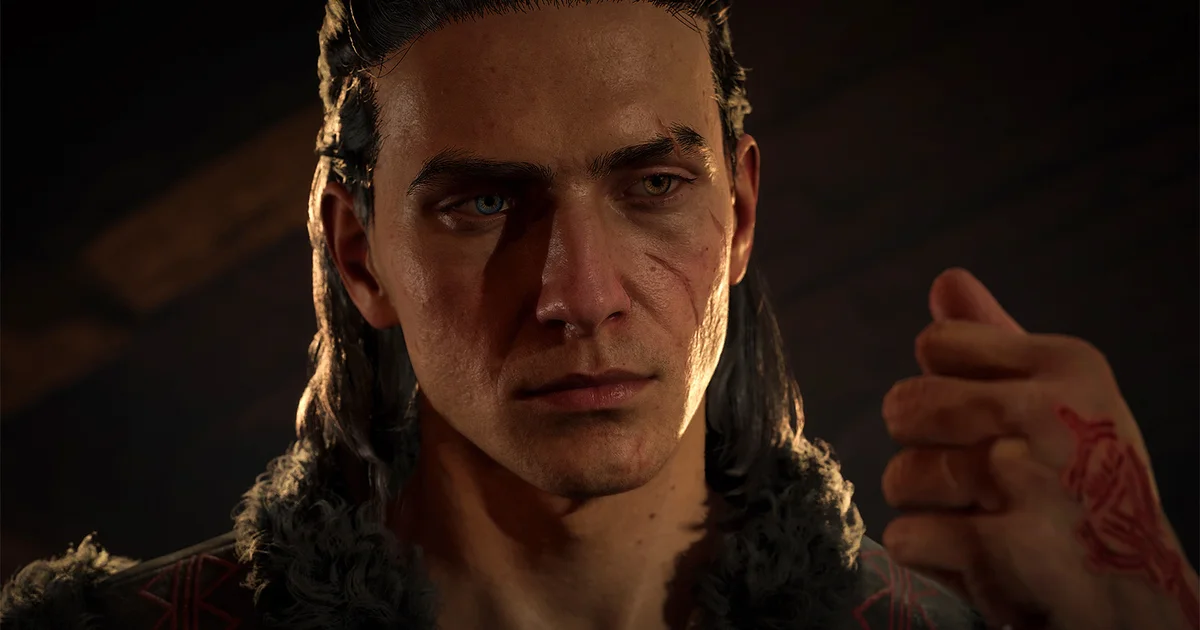
There’s plenty to admire in The Blood of Dawnwalker. It grabbed my attention earlier this summer when a debut gameplay trailer dropped, and I’ve stayed hooked ever since—still reeling from it as if I’d been spun around like Linda Blair in The Exorcist—now that I’ve watched the gamescom walkthrough. It feels like Witcher by DNA, Vampire by atmosphere, and Kingdom Come in its grounded medieval feel. And if the small Polish team can live up to what it’s promising, The Blood of Dawnwalker has the potential to stand out.
Quick context: The Blood of Dawnwalker is Rebel Wolves’ first release. The studio is co-founded by Witcher 3 game director Konrad Tomaszkiewicz and supported by a roster of ex-CD Projekt Red coworkers, including his brother Mateusz—lead quest designer on The Witcher 3—Jakub Szalamek, lead writer on The Witcher 3, plus many others. LinkedIn puts the team at 134 people, which strongly suggests it’s already more than just a tiny outfit. The overlap with The Witcher 3 won’t come as a surprise, and seeing the game running for even a short moment makes the connections obvious.
Once again, we take control of a ponytailed warrior moving through a created but firmly rooted feudal medieval landscape, where worn-down peasants shuffle by and complain as we go. We also keep our conversations fairly quiet while we roam, and disputes are frequently handled with a longsword used two-handed—taking down bands of bandits, guards, and anyone else who blocks our way. Still, just like The Witcher, there’s a more troubling layer beneath the surface: supernatural forces lurk under the ground we move across, and we play a protagonist with abilities beyond normal human limits who can stand up to them. A lot will feel familiar—the mood, the systems, and the guiding design philosophy. That said, there are also clear differences.
In The Blood of Dawnwalker, you play as a vampire, but not in the usual way. You’re a Dawnwalker—a hybrid, half-vampire and half-human—built to evoke Blade from Marvel’s comics. That means you can do things like, exactly as the name suggests, walking in daylight. Yet this mixed nature is also tied directly to the time of day. Put simply: during daylight hours, you operate like a human who can handle most human activities; when night falls, you shift into a vampire form with its own special abilities. The entire gameplay is organized around that duality, and some situations can be dealt with in different ways depending on whether you’re facing them at night or in the day.
The gameplay shown earlier this summer demonstrates much of that firsthand. The gamescom presentation I attended uses the same basic setup, but pushes us deeper beneath the cathedral, where an important secret is waiting to be uncovered. The game has also received tweaks since the initial reveal—most notably, adding a “far” camera alongside the “close” one, at the request of the community that’s been growing around the title. The presentation’s goal is to showcase the game’s sandbox approach to finishing quests, with the secret beneath the cathedral revealed through two contrasting methods: one while you’re a vampire, and one when you’re a human.

As a vampire, you gain access to truly extraordinary options. One moment I found especially exciting involves Plane Shift: you point to a surface and teleport—or “shift”—to it. It also places you correctly on whatever you target; if you aim at a wall, you’ll end up standing on it and can then climb up or down. Picture Batman and Robin scaling a building in the classic Adam West Batman series. You also don’t need a sword as a vampire, because your clawed hands take over, and your fangs let you latch onto enemies and drain their blood. With rooftop areas in the city open to you, you can spot an exposed window into the cathedral at night and slip in from there.
From the rafters inside the cathedral, you can look down on the blood ritual taking place below—one you interrupted during the summer showcase to kick off a boss fight. Instead of getting pulled into the same moment, you can study a fresco on the ceiling to learn the meaning of a Saint’s symbol. Then you match that symbol with information from a book in a nearby library, which leads you to the location of a gravestone you’ll need to move in order to reach the catacombs beneath.
Daytime changes things. This time, you can step right into the cathedral and take part in a service, but you still have to talk to people to meet your goals. First, you deal with the glassy-eyed Abbot who is baptizing an infant with blood—vampires are a recognized ruling power in this world. After that, you speak with a Deacon who’s busy cleaning an altar. The Deacon asks you to assist with solving a brutal mystery at a nearby almshouse, and yes, it has a very Witcher-like feel. It even leans on Witcher-style senses to bring clues into focus—before ultimately giving you the lead you need to find the grave that opens the way to the catacombs. So there you go: two separate routes (both briefly outlined by me) for accomplishing the same objective—one that takes longer than the other. That naturally leads to the question: if waiting for night gives you the vampire advantages, why wouldn’t we always hold out until then?
Two reasons. First: some quests have to be handled at a particular time of day. Second: the clock itself. You don’t really have unlimited time. The overarching main-quest setup of the
The premise is that you’ve got 22 days to rescue your loved ones, even though I’m not completely sure what threat you’re meant to fend off—probably vampires.
Moving forward through the story takes time, which is shown by an hourglass icon and a number beside whatever option you choose. If you simply roam the world, investigate, fight, and loot, time won’t pass. For example, opening a grave to reach the catacombs uses up a small portion of that time, and it brought me closer from day to night.
You’ll also run into a light time pressure during conversations, driven by a fading time meter that pressures you to decide quickly. That said, it only shows up in conversations that matter a great deal, not across the entire game. I like the way the ticking clock creates tension and urgency throughout play. It nudges you to stay sharp—making progress as both a human and a vampire instead of letting things drag.
Notably, The Blood of Dawnwalker feels like a deliberately unhurried experience. Its sandbox approach and the flexibility to tackle problems however you prefer give you ample room to wander and search before you even figure out what you’re supposed to do. Hints are also easy to tuck away in clever spots. I ran into a moment where the emblem Coen was looking for turned out to be hidden beneath a golden chalice in a building I first had to track down. After locating it, I still had to pick it up and turn it around to make the symbol visible. The Blood of Dawnwalker often carries that same vibe; for instance, taking a look at the fresco earlier meant interacting with several points of interest. I appreciate this because it signals that the game trusts you, encouraging you to slow down and think. Still, I can see how things might become monotonous if every situation plays out in quite this way.
There’s a calming presence to the protagonist, Coen—both in how they’re portrayed and in the English-language voice work from Will de Renzy-Martin. Yes, he tells bedtime-style stories, and you only need to listen to get why: his gentle delivery feels like a warm blanket, evoking Tom Hiddleston. I genuinely enjoy characters and performances with this kind of steadiness.
There’s plenty to look forward to in The Blood of Dawnwalker. The compelling dual-character idea, paired with its striking shape, supports a grim, supernatural tale focused on vampires and monsters, all wrapped in a world that’s historically grounded and carefully constructed. On top of that, it introduces fresh gameplay upgrades, including a simplified one-button block-and-strike combat system, along with a tougher directional combat variation. The comparisons to The Witcher are obvious—and likely welcome—but there’s still more going on here. You can feel a sense of momentum, as the team behind it comes together to figure out how they can innovate while still aiming to spark similar feelings. Even if they clearly don’t have the same resources as CD Projekt Red, they have drive. If they pull it off, it could end up as another stand-out Polish accomplishment.