Supermassive’s so-called “party horror” entries—which is how I like to describe them—have somehow become a guilty pleasure of mine. In my view, the series kicked off with Until Dawn back in 2015 and hit its stride with House of Ashes in 2021. (That said, I also had a good time with the oddly charming Quarry in 2022.) What ties them together is a format that plays out like an interactive horror movie: you’re tasked with shepherding a handful of unlucky characters through a slasher-style situation by weighing a series of essential decisions—always hoping they won’t end up meeting some gruesome end.
They may not be multiplayer in a strict sense, but the enjoyment really takes off once other people get involved—either by calling out suggestions for what you ought to do, like “Don’t go down there alone!”, or by directly taking control of certain characters in hotseat multiplayer mode. Hotseat multiplayer—how nostalgic. I genuinely enjoy hopping into these games, so I’d been looking forward to the studio’s next release, Directive 8020, even with its share of setbacks, release delays, and layoffs. After finally playing it, though, my excitement has cooled a little.
Directive 8020 is positioned as a step forward for the series, bringing in additional mechanics such as stealth-action sections that you control yourself. In earlier entries, these titles played closer to polished point-and-click adventures: characters wandered through carefully crafted locations packed with clues, while button-matched quick-time moments kicked in whenever action demanded it. Those core pieces remain, but stealth-action has now joined the mix. You’re required to crouch-walk, track enemy patrol routes, and try to stay unseen. That shift makes Directive 8020 feel more like a typical survival horror experience—a risky turn, since Supermassive hasn’t had much history with the genre—and it naturally invites comparisons with other survival-horror games. Honestly, that makes Directive 8020 feel a little less distinctive.
The segment I got to play—roughly the first two-thirds of the fourth episode, out of eight—appears to spotlight these new stealth-action stretches. The concern is that none of them really land. The opening sequence thrusts me 18 hours ahead in the sci-fi storyline, where a body-snatching alien has taken over our spaceship and is mimicking multiple crew members. Everything has fallen apart, and I’m in escape mode, so in stealth-action terms I have to move through part of the ship while evading a patroling threat. There are crawlable tables, jumps across platforms, and occasional environmental props you can use as distractions, though they feel limited. On top of that, because I’m inserted mid-game, I never had the chance to learn the game’s unusual control scheme—why, for instance, is sprinting assigned to the left bumper? As a result, I trudge along at a painfully slow pace, flicking my flashlight on and off while crouching, trying to outthink the enemy. It’s an irritating start.
The next stealth-action part is more unsettling, but it still doesn’t fully persuade me. I’m told to work my way into narrow pipe ducts to search for a missing crew member. This section pushes the camera in close with a first-person perspective (usually the game stays third-person) as I crouch-walk through dim corridors. It’s cramped and pressuring, because I can sense a grim discovery coming, and shadowy forms keep flickering at the edge of my vision as I proceed. Still, the tension is softened by a feeling that I’m effectively protected, since I don’t really have much control over what happens—beyond moving from point A to point B. There’s a brief, surprising revelation, followed by what ought to be a thrilling scare, but because I’m only watching, the moment loses its punch.

Soon after, the last stealth-action sequence takes place in a wider environment and leans into a familiar kind of objective: solve a straightforward puzzle by activating a bridge control terminal, which means tracking down a fuel cell while steering clear of the lurking threat nearby. It’s simple and fairly routine, and the biggest issue here is the enemy itself. Games in this style depend heavily on their antagonists and the tension they’re able to generate. Think back to the Girl from the start of Resident Evil Requiem, who follows Grace down those narrow hotel corridors—disappearing up into the ceiling before dropping back into the dark with sudden horror. She’s twisted, fast, and genuinely frightening. In this case, though, the threat doesn’t manage to produce that same dread.
The enemy looks like a teenager in a hoodie, and that concept can definitely be unnerving. After a serious fall, though, it has twisted and rebuilt its bones, giving it a more supernatural quality. Still, in this huge, cavernous—yet oddly ordinary—space station interior, it comes across as small, and whatever impact it might have is dulled by its stiff, mechanical motions and a patrol route that feels predictable. The result is that there’s barely any suspense at all, as if the fear has already drained into the vast echoing room we’re trapped in. Mechanically, there’s little for the player to do beyond watching, shuffling around a bit, watching again, and repeating the process. Everything feels a little bland and basic. I can only hope the stealth-action components mature beyond what we’ve seen so far as the game continues—though right now we’re on Episode 4, not Episode 1.
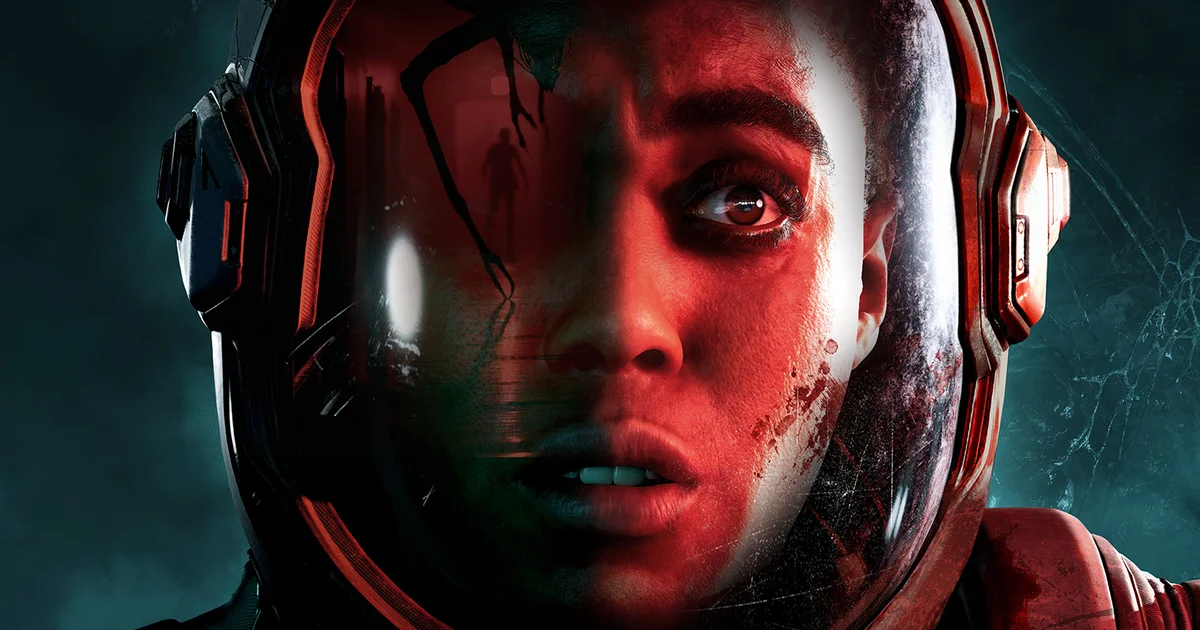
Directive 8020 feels more confident when the characters begin trading dialogue and we start making key story calls, even if this preview doesn’t offer a lot of options to dig into. The cinematic presentation continues to stand out, with impressive attention paid to recreating likenesses of actors such as Lashana Lynch—Monica Rambeau in the Captain
Marvel films – who shares a striking likeness here. Still, at times, the animations and performances don’t carry much spark or momentum. I notice the
The ship’s captain – played by the character Danny Sapani in a particularly abrasive portrayal – tells his crew that a teammate is missing. They assume he may be dead, or at least facing severe trouble. That revelation ought to raise the stakes and pull a noticeable response from everyone, yet the crew barely reacts, especially in physical terms. The characters line up in a circle with their hands hanging at their sides, almost as if they’re waiting for instructions. It’s not especially interesting to watch.
Another addition to Directive 8020’s is Turning Points, which builds on the series’ core ideas of choice and consequence by introducing the ability to rewind time and revisit key moments so you can try alternate results. The mechanic works much like loading a save from a particular moment, making it easy for players to satisfy their curiosity. That said, isn’t the appeal of choice and consequence really tied to replaying games to uncover different stories? Either way, it’s hard to get a strong sense of how this system functions within about an hour, since there aren’t many Turning Points that meaningfully stand out.
Some Turning Points are off-limits because they’re tied to happenings from earlier episodes, including the outcomes of certain prominent characters. The premise is intriguing, but the only options I’m able to explore are whether the ship’s sole weapon – essentially a direct Chekov’s Gun – shows up, and whether I get taken during the stealth-action segments. I opted to test the second scenario, then deliberately let my character be captured, which led to an eye injury. It’s grimly amusing, but it doesn’t appear to meaningfully affect how the scene plays out. What’s striking is the lack of concern about my serious wound, or any sense that medical help might be needed—like I’d only scraped my knee.
By the end, I’m left fairly confused—and concerned—about Directive 8020 after this preview. I’m hoping some of what’s bothering me – trouble forming a connection to the game and its story – comes from not having played the earlier chapters. Usually, this series really clicks once you start to feel the weight of decisions building, and you realize just how many routes the game could take, particularly when you genuinely care about the people you’re trying to protect. Here, though, I only get a quick snapshot of those elements.
What I do see, maybe more than I’d expect, are stealth-action sequences, and they don’t win me over. Does this balance between gameplay and narrative beats hint at how upcoming episodes will be organized? If the episode runs for roughly an hour and there are eight episodes in total, does that point to the overall runtime of the game? Honestly, I feel like I’m walking away with more questions than answers, and my confidence in Directive 8020 overall has taken a hit. I hope my worries turn out to be unfounded when it releases this May. Whatever the case, we don’t have long to wait before we’ll know.