For a number of years, the rule of thumb in Hollywood has been fairly direct: a familiar sort of recognition, delivered with a twist. Cheers, but it’s set in a café, and everyone’s in their twenties. Lost, but it’s based in LA, with Joseph Fiennes in the mix. To be fair, it didn’t always land—I still have warm feelings for you, FlashForward—but it worked more often than not. The reason it should work is pretty clear. We enjoy formulas, and we like small tweaks to keep us alert and engaged. Still, at its centre there’s comfort in knowing what to expect, and that kind of familiarity can be wonderfully effective when the circumstances are right.
So this is Switch 2, then. And it’s also how it feels to have the new console for a weekend. There’s plenty I already know well—plus a bundle of minor upgrades inside that same sense of familiarity, some of which are unexpectedly significant. Bottom line: I’ve found myself genuinely fond of this console. I’m glad it’s here.
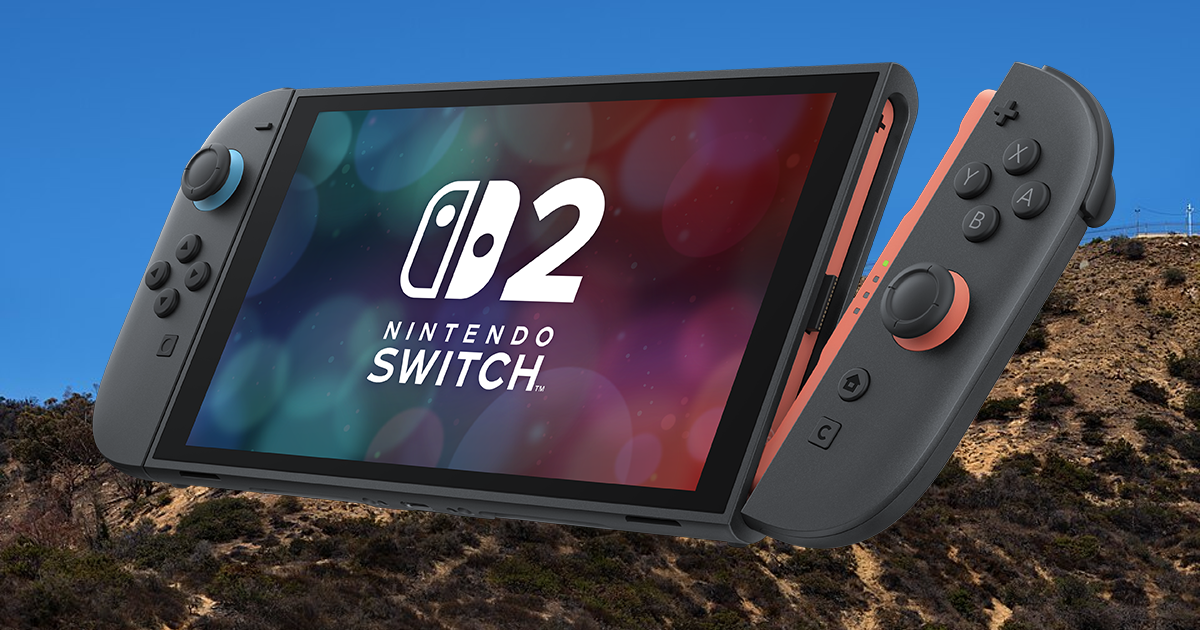
And it feels great in your hands—bigger, and it also seems a little sleeker than the Switch. That glossy screen is so striking that the previous model suddenly looks a touch cramped, the way the original Switch once made me feel like I had to go back and look at the Vita and ask, really? Was it really that small? And what about the border? The Vita, likewise, once pushed me back toward the PSP and made me think…
You know the picture. Still, it remains jaw-dropping. It’s so vivid and sharp and wide open—those colours, that lovely smoothness. Everything feels similar, yet subtly reshaped too: the Joy-Con. They now click into place with a satisfying magnetic snap, and when you detach them you use a raised trigger action that still manages to feel a little uneasy the moment you go for it each time.
(I’ll pause the story for a moment to talk about the Joy-Con a bit more, since you can now remap their buttons, with saved layouts tied to individual games. You’ll find this under Accessibility in the System Settings menu, alongside a range of other welcome improvements—like the option to adjust text size, enable bold text, switch to high contrast mode, zoom in, change display colours, turn on mono audio, and activate text-to-speech.)

Once you turn the system on—the transfer process has clearly taken cues from Apple; I’ve now done it for two Switch 2 consoles, and it worked flawlessly on both occasions—the UI feels instantly familiar. The little pops, clicks, squeaks, and bleeps you hear as you move through the menus are just as enjoyable as ever, and the restricted onboard storage turned out to be slightly less limiting than I expected. I managed to download a good number of games right onto it, and the only truly awkward point came when I tried to remove the remarkably thin Micro SD Express I’d bought from its plastic packaging, fully convinced I’d accidentally bent something that cost me fifty quid. (That said, I’ve since realised I filled the onboard memory in roughly thirty minutes, so maybe I’m being a touch too optimistic in how I’m feeling.)
After that, I ended up spending a surprisingly long stretch just playing familiar games—ones I’d moved over from the original Switch. A couple of thoughts. First off, for reasons I can’t quite pin down, the Switch has become a home for plenty of games I never seem to finish: Into the Breach, Outer Wilds, a range of Marios. I never fully “get” them in the way I’d like, so it’s great to see them ported over so smoothly, letting me keep enjoying them.
Second, Nintendo Online has quietly evolved into something genuinely excellent. Within moments of booting up the Switch 2, I was playing Tetris DX and ESWAT—yes, I know, the heart wants what it wants. And the moment I launched The Wind Waker, I felt that instant wave of nostalgic sadness. It still amazes me that the GameCube is now treated like a retro system included with a Nintendo Online subscription. Wasn’t it only two years ago that my friend Stu and I lined up on Oxford Street to see Miyamoto at the grand HMV? Well—actually, no. It was 22 years ago. But that part hardly matters. The Wind Waker has aged remarkably well. With my new console, I could easily spend a month just roaming around these familiar islands, and I’d be completely satisfied.
As for new releases, it doesn’t quite match the kind of lineup you’d expect at an SNES scale, but the games I’ve tried over the last couple of days have been rather enjoyable. For starters, the two recent blockbuster Zeldas feel almost fresh again, thanks to improvements you can purchase separately or that come bundled with the premium Online subscription. I’ll have a full write-up on this soon, but a quick look at the Depths in Tears of the Kingdom showed a game that’s been subtly reworked. The blur/graininess is gone. The edges are crisp. I’m really happy to finish what’s typically such an endless game in a version that feels so nicely refreshed.
On another note—and there’s also an article planned on this subject—Cyberpunk feels like both a marvel and, during firefights, something that’s a bit shaky—just enough to be noticeable. I completely missed out on the game until now, and I’m keen to dive in, even if it’ll always feel somewhat out of place on Nintendo.
Let’s get to the main attraction: Mario Kart World. I may have, a little too readily, shared my thoughts on why I probably shouldn’t be giving opinions on a new Mario Kart. Still, when you look at the system itself, the clearest highlight in Mario Kart World is GameChat—less of a win for Mario Kart and more of a win for Nintendo. The marquee launch game for Switch 2 pairs up with Nintendo’s creative social feature in a way I didn’t anticipate. Free Roam is crucial here: it’s a direction-light mode that feels somewhat tucked away in the game’s main menu. Meeting up with friends in that space creates the perfect setting for the kind of relaxed catching up you want after time apart. “How’s the family doing? And did you spot that P button next to the buffalo that just rammed you into the central reservation?”
I didn’t expect to feel this way. I understand that the Switch 2 already asks a lot from your wallet, and putting this content behind a paywall (GameChat is free until March 31, 2026, but online play outside free-to-play titles needs a paid subscription) feels a little questionable, and driven by revenue. I also recognize that, beyond Mario Kart, the launch slate is fairly limited, and most people already understand the console’s basic operation. Battery life also leaves room for improvement—it drains rather quickly. Even additions like the new mouse mode can come across as a bit strange, as though they’re not fully realized yet. (And for the record: don’t try using it on your leg like I do, especially if you prefer wearing corduroy jeans like I do.)
Even so, I’m two days in, and I’m still genuinely captivated. Here’s a fresh Nintendo system, paired with several games I already enjoy, along with a set of smaller upgrades that could change the way I play—and reconnect—with longtime friends. Plus, there’s the obvious thrill of what’s still coming next.
A Switch 2 console, launch titles, and a selection of accessories were supplied by Nintendo.