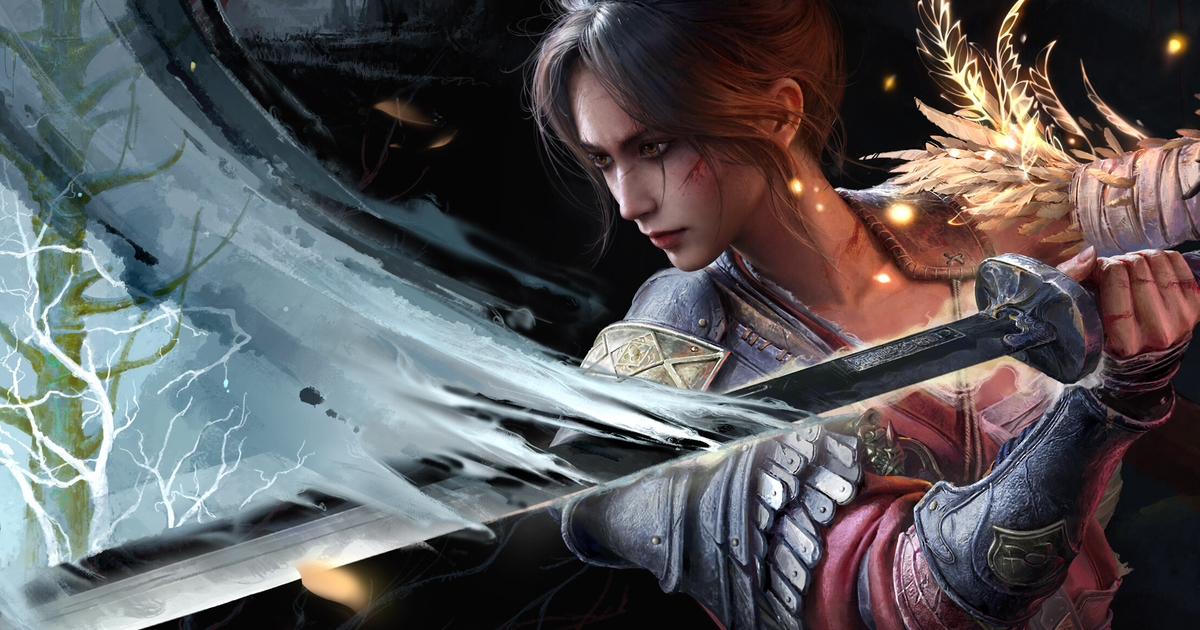
Wuchang: Fallen Feathers keeps catching you from every angle: it’s a polished, composed, good-looking soulslike that adds an intriguing spin on death, even if it rarely delivers real moments of surprise.
Comfort food is familiar for a reason. Most of us have something we return to when we want a hit of nostalgia or that comforting, familiar feeling—maybe a bowl of soup, or a big bag of chips. Or perhaps it’s a tough, no-nonsense action RPG that has you firing off colorful taunts at the strange creatures on your screen during late-night sessions. Quick detour—I’m not about to turn this into a recipe column. The truth is that playing Wuchang: Fallen Feathers feels very much like settling in with your favorite comfort food, assuming your comfort food happens to be strict soulslikes. It’s certainly enjoyable. Still, it almost never manages to throw up any truly unexpected moments.
Let’s pause for a moment. Wuchang: Fallen Feathers is a soulslike made by the Chinese indie team Leenzee, created outside the famous FromSoftware address—home to Dark Souls, Elden Ring, Sekiro, and Bloodborne. As a soulslike, it naturally carries a baseline sense of tension. Wuchang clearly takes cues from Dark Souls, but the real question is how closely it should mirror that model. How far can it push original ideas without drifting too far? And how smoothly can it walk in the footsteps of the subgenre’s early leaders without triggering the inevitable “we have Dark Souls at home” comparison?
Those exact worries showed up for me just as often as the poisonous enemies and frantic attackers that tried to ambush me as I moved through Wuchang. Fallen Feathers can feel unnervingly familiar—even if you’ve only spent time with a handful of Souls-style games.
The combat revolves around stamina. The levels are mostly straight lines that circle back in on themselves, as if each path is trying to tie off with a shoelace made of grass and dirt. You’ll meet massive—and at times genuinely annoying—optional boss fights made up of multiple phases. Shrines, similar to bonfires, serve as checkpoints for leveling up, healing, and bringing different fallen enemies back to life. The story takes place in a twisted fantasy world steeped in near-apocalyptic turmoil, set in the late Chinese Ming Dynasty, and it does bring some striking visual touches that help it stand out from the subgenre’s frequent Berserk influence.
Wuchang does bring meaningful changes that genuinely got my attention. Wuchang—the amnesiac pirate character, not the game—has a disease called Feathering, and it’s ravaging the whole empire. People who catch it turn into mindless, aggressive, flesh-eating birdlike monsters, or into grotesque, soft-bodied horrors that look as though their insides have been pushed outward through their mouths.
Wuchang herself seems to be different. She has a striking look, with a few feathers sticking out of her arm and she can collect a resource called Skyborn Might, which can be used to cast spells and automatically strengthen weapon behavior. The catch is that Skyborn Might only builds when Wuchang performs a split-second dodge or successfully lands particular combos. That creates a clear risk-and-reward loop, pushing me to keep repositioning beneath an enemy’s tentacle-like appendage, ready to strike—just to slip away from an attack that would otherwise drain my health bar. While the fights aren’t quite as fast as Bloodborne’s, Skyborn Might adds a satisfying sense of timing to each exchange. There’s also a pleasant, glowing sound effect that plays every time I pulled off a last-moment sidestep. The audio often felt almost musical as I flowed out of incoming strikes, moving in step with the rhythm of an enemy’s sweeping claw swings.

Wuchang is also much stronger at linking attacks than what you typically get from a customized Dark Souls character. You can choose from five weapon groups—axes, dual blades, one-handed swords, spears, and my personal pick, longswords—and equip two weapons at the same time. The fun twist is that, with a quick flick of the analog stick, Wuchang can instantly activate the primary skill of her currently unequipped weapon. That lets you, for instance, release a heavy-axe strike with real weight, switch immediately to the dodging option on a one-handed sword, and then finish with a thunderous spell. When I wasn’t the one taking punishment, the game looked genuinely impressive.
Even so, for all those combo options that can feel like colorful, fireworks-style showpieces, the game often steered me toward the most reliable route: longswords. Compared with other weapon types, they lean more toward parrying.
Some fights depend almost entirely on your ability to parry incoming sword attacks. You can dodge all day—no matter how quick your hands are—but if your opponent can follow up faster than Wuchang can re-position, you’ll still get caught. Each weapon has some way to reduce damage, yet I kept finding that the most straightforward response to sword users was simply to bring out a heavy blade of your own.
Parry-focused action games are all the rage right now. I can’t immediately remember the last one I played that didn’t ask you to redirect your enemies’ attacks at the exact moment. And when you’re not going toe-to-toe with enormous
creatures that like to turn their rotting claws or accursed beaks into weapons, Wuchang is also another title that clearly attracts parry lovers.
In these games, dying matters just as much as the act of killing, so Fallen Feathers delivers another standout idea through its system of falling. You’ll still have to track down where your body ended up to recover any lost experience points, which are now called Red Mercury. The difference is that you won’t lose everything right away. This time, the amount you…
Instead of a simple penalty, your setbacks depend on a ‘Madness’ meter that climbs every time you’re defeated. When it reaches its highest point, you’ll both deal and take more damage, you’ll lose all your Red Mercury on your next death, and—on top of that—your inner demon, a quick-moving doppelgänger, will show up to block you from the outcome you’re aiming for.
Much like Skyborn Might, it’s tempting to weigh the risks and rewards of pressing deeper into madness if you like living a little dangerously. You can even raise your Madness intentionally without dying, as long as you play it strategically. And having to stare down your own grim, mirrored self—who’s standing in the way of the Red Mercury you need for your next mouthwatering ability—is always a compelling moment. Since a subgenre is going to weave death so tightly into its identity, I’d love to see more digging into how players experience it.
In a way, this also helps explain why Wuchang comes across as a bit more approachable for a soulslike. Death doesn’t always hit you with massive consequences. Sometimes you lose almost none of your Red Mercury. On top of that, there are plenty of ways to take advantage of certain encounters, depending on how you approach them.
To be honest, it took me around 36 hours to finish the game. At that point, only two optional bosses remained for me to uncover during a later playthrough. I will say, though, that the contrast between Wuchang’s easiest sections and its hardest ones is huge. I managed to defeat several bosses without dying even once (please accept my small brag), while others felt like they crawled right off the screen to ruin my nerves at 2 AM.
A sudden jump in difficulty can be shocking, but nothing felt as relentlessly brutal as Dark Souls. There’s a real payoff in realizing, yes—you’re getting better. You know a boss fight is truly rough when you’re yelling insults like someone stole your fridge leftovers, and you know you’ve had a good time when you celebrate by punching the air like you’ve just caught the winning moment in a football match. (I don’t follow football, but nothing else in my routine makes me act like such a hard-core supporter of a match the way soulslike bosses do.)
I’d also be neglecting a key point if I didn’t call out the game’s gorgeous style. Wuchang is packed with striking outfits, detailed armor, playful hats, and even monster heads you can use to decorate. I never expected “RuPaul’s Drag Souls” to be this much fun, and yet here we are—though I could have lived without the occasional bit of overly bouncing ahem fan service. Still, the transmog system lets you put together your look while keeping your stats intact.
Wuchang definitely has some standout peaks, especially when it leans into unusual supernatural Chinese myths during the later stages. Still, it never fully escapes the sense that it’s revisiting the subgenre’s most memorable moments.
Whether enemies lurk behind doors, wait to spring at you as you edge toward a ledge, or burst out of an actual pot, that creeping feeling of déjà vu seems to seep into nearly every false alarm in Wuchang. (I’m saying almost because there’s one memorable jump scare I won’t spoil here—and I can’t believe FromSoft hasn’t been cruel enough to force us through it yet.) You also see that same effect in underground boulders that suddenly knock you out, or in a Bone Whistle item that functions a lot like Elden Ring’s Spirit Summons during boss encounters.
Dark Souls lets players leave messages for others to find, so they can either warn you about traps or coax you into jumping off a cliff. Wuchang doesn’t offer that kind of online feature, but I did run into situations where developers left notes behind. One message told me, “Take the leap,” pushing me to jump from a ledge and discover treasure waiting below.
These moments, taken together, sum up Wuchang pretty well, in my view. Even when the game tries on purpose to distance itself from the usual Dark Souls tropes, it still finds ways to remind you that it’s tied to the genre—and oddly similar to another title you may have already played.
I don’t mean to downplay what Wuchang brings to the formula. Its impressive set pieces, faster-paced combat, and inventive death sequences are fun additions—they just don’t completely overhaul the wheel. For instance, Sekiro’s uncompromising emphasis on parries and Bloodborne’s aggressive rhythm do a lot to remake the structure that Demon Souls built, rather than feeling like simple re-skinning. And even though it commits hard to stylish outfits, almost everywhere else in Wuchang: Fallen Feathers feels like it’s trying to squeeze itself into Dark Souls’ wardrobe so tightly that it ends up blending into the shadows.
That’s why it ends up feeling like comfort food. Wuchang feels familiar. The meal is enjoyable, but I’ve tasted this exact dish before. You generally know what’s coming, you can recognize the flavors you’re going to get, you can even guess the order they’ll arrive in, and an unexpected garnish probably won’t catch you off guard. How much you’ll tolerate Wuchang: Fallen Feather’s familiarity likely depends on how many times you can enjoy another helping of your favorite comfort food before you start craving something new.
A copy of Wuchang: Fallen Feathers was provided for review by 505 Games.