Supermassive’s cautious choices bring along plenty of familiar irritations, yet the game’s standout craft—and a surge midway through—still make for an overall experience that’s grimly compelling.
About halfway through Little Nightmares 3, there’s a clear turning point: after an opening stretch that often plays like a routine homage, the new studio, Supermassive, finally appears to hit its stride. Step by step, the subdued hum of an ominous underground void gives way to wet, rain-soaked corridors as our tiny protagonists press toward the outside of a colossal, throbbing machine. Then the Carnevale arrives in full view—an eye-catching carnival of big-top tents, sparkling lights, and a parade of strange visitors, all staged with impressive care. Even so, Little Nightmares 3’s constant reliance on what came before means it drags along a fair share of frustrating inherited habits, and yet it’s hard not to get drawn in by the spectacle.
Original studio Tarsier brought its whimsically bleak horror run to a close with 2021’s Little Nightmares 2, passing responsibility to Until Dawn’s Supermassive Games. On paper, that handoff looked like the right moment to reconsider a franchise already stuck in familiar grooves, but Supermassive—whatever the outcome—mostly keeps to the well-known blueprint, delivering more of the same without much detour. Still, that’s not automatically a downside. Even eight years on, nothing quite matches Little Nightmares; it may echo the tone of Tim Burton and lean on nods to Playdead’s celebrated creations, but its signature atmosphere—a mix of claustrophobic dread and dark, childlike imagination—feels unmistakably its own.
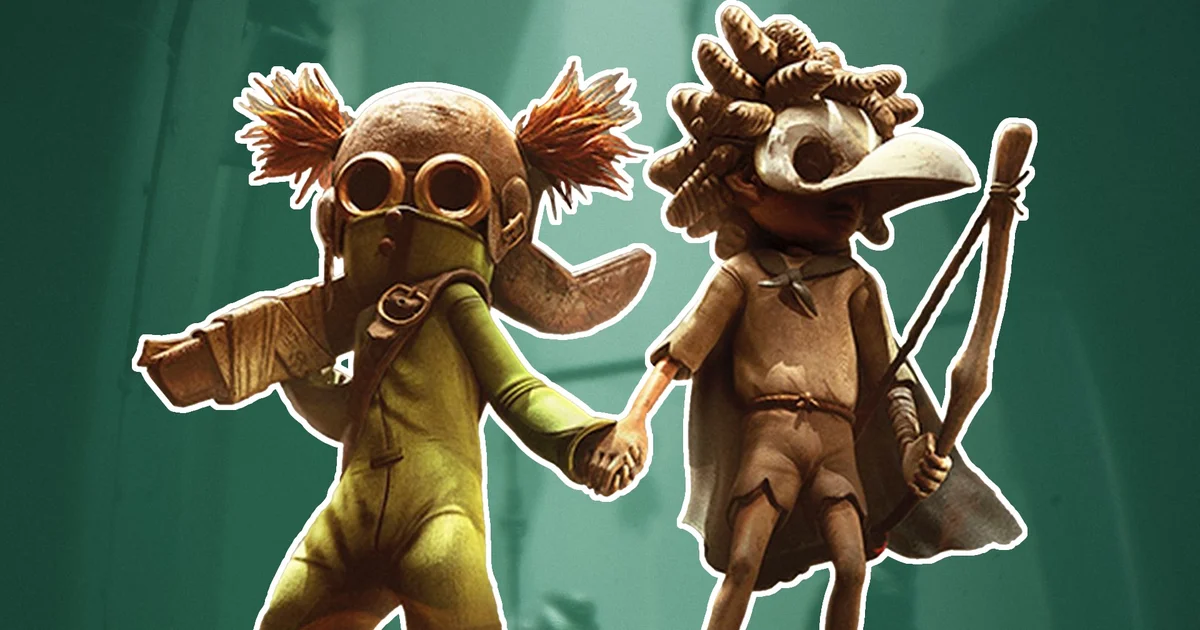
Supermassive captures that spirit well as fresh leads Low and Alone move through a sequence of brand-new zones inside The Nowhere, with a story that largely stands apart from the linked narratives of earlier games. The duo fits naturally among Little Nightmares’ lineup of delicate protagonists: Low, all long limbs and a bow and arrow, carries a jittery determination, while Alone—armed with her dependable wrench—reads as the more consistently confident companion. Their closeness is conveyed with almost no spoken dialogue, thanks to expressive, finely observed animation work; for instance, Alone repeatedly reaches out to help Low after they surface from an air duct. Beyond the characters, the lonely spaces you travel through are carefully made, with the visual design leaning hard on the interplay between light and shadow.
There’s the stripped-down, sand-blasted city that kicks off the adventure, where only a handful of residents remain—staring in permanent terror across cracked ancient streets. There’s a grey, Kafka-like nightmare of coughing chimneys and absurd bureaucracy, and its bleak side alleys are piled with sickeningly sweet lollipops that turn every corner into something unsettling. And there’s the dazzling Carnevale itself, a display of grotesque extravagance where the guests indulge until there’s nothing left. Finally, there’s one last stop I’ll leave for you to discover. It’s an impressive collection of broken, vivid images, and while its largely monochrome look sets it apart from earlier entries, it still manages to deliver a slightly different mood. Previous games leaned into a warmer menace, helped along by richer color palettes that felt more personal; here, everything feels sharper, more distant, and less intimately connected.

This is only one of several places where Little Nightmares 3 seems to miss the mark, even though Supermassive is clearly operating within a familiar structure. Getting through each stretch still blends 2.5D platforming, puzzle work, stealth, and frantic breakouts, with a main antagonist in every world making their presence felt. But when it comes to how it plays second by second, it can feel a little flat. During the game’s fairly formula-driven first half, you spend a lot of time moving through empty, indistinct rooms, and even when bigger set pieces do show up, they often feel predictable and dull in how they’re realized. You’ll creep across the foreground to avoid notice, then jump and slide when enemies suddenly come after you—but these moments rarely reach the level of inspired movement, creeping dread, and sustained pressure that earlier releases delivered. The puzzles in particular are hard to enjoy, turning the series’ established rhythm into simple chores like shoving blocks and flipping levers rather than offering anything more engaging.
That’s especially surprising because Little Nightmares 3 adds two-player online co-op. Even so, Supermassive seldom uses the chance to get creative with the game’s two protagonists. Occasionally, you’ll run into a problem that demands a particular character’s distinct ability, or both players may need to use an item at the same time—but real, layered teamwork is rare. It rarely climbs to the satisfying puzzle design heights of earlier games and never quite becomes absorbing on its own. Still, at least the clunky combat from Little Nightmares 2 has been smoothed down to the point where it barely registers.
On top of that, Little Nightmares 3’s inconsistency is amplified by its decision to bring back every irritating habit of the series—at times even making them worse. The result is imprecise controls; it also includes platforming segments that frustrate you with questionable camera and perspective decisions. Then there are checkpoints that waste time, paired with trial-and-error moments that aren’t clearly signposted, along with sudden instant-death failures. Too often, Little Nightmares 3 plays out like an extended quick-time sequence, leaving you to figure out which button to hit in order to stay alive. And although some of its beautifully designed set pieces truly impress, they can only hold up under so much examination as you trudge forward, one defeat at a time.
I know this comes off as mostly negative. I also recognize that many of these gripes aren’t brand-new to the franchise, and they may not bother longtime fans who have long since adjusted to the series’ design quirks—even if a few feel especially distracting this time around. While I’ll be honest that I spent a meaningful portion of my time mildly frustrated with Little Nightmares 3, it would be misleading to say I wasn’t equally captivated. It still manages to seed enough curiosity through recurring enigmas and themes to keep the story moving with momentum, even during its weaker stretches. And after that underwhelming first half where Supermassive mostly goes through the motions—presenting an energetic, though somewhat uninspired, version of what earlier games did—it eventually starts to carve out its own voice.
Once the bright big top tents and the twinkling Ferris wheel lights start to appear, Little Nightmares 3 settles into a chain of imaginative, confidently staged moments that—without ever fully dodging the series’ familiar irritations—still carry it smoothly all the way to a satisfying ending. The final two chapters stand out especially clearly, delivering a spark and ambition that isn’t as noticeable in earlier sections. Perspective is used with a playful sense of timing, with the cinematic camera frequently breaking away from its usual left-to-right rhythm to give the world a stronger sense of presence—most notably as it threads through the twisting maze of connected corridors and rooms in the last chapter. That’s also where Little Nightmares 3 finds a concept it can lean on effectively, leading to a clever run of wrap-up puzzles that, together with some impressively arranged set pieces and standout monster design, provide a powerful close to the story.
Little Nightmares 3 does come with a few flaws, yet when it sets its pace against the familiar absurdity, it still serves as a solid reminder of why this distinctive series has endured. It’s packed with dark intrigue and grotesque amazement, balancing uneasy pressure with unsettling scares, and tucked inside its childlike horrors is genuine feeling, too. Although Little Nightmares 3 brings in a new developer and a slightly adjusted tone, the heart of the series still feels lively—even if it doesn’t completely reach the heights of what came before. It’s a shame it doesn’t hit its stride sooner, but once it does, it’s rewarding to find yourself back in this eerie, captivating world.
A copy of Little Nightmares 3 was provided for this review by Bandai Namco Entertainment.