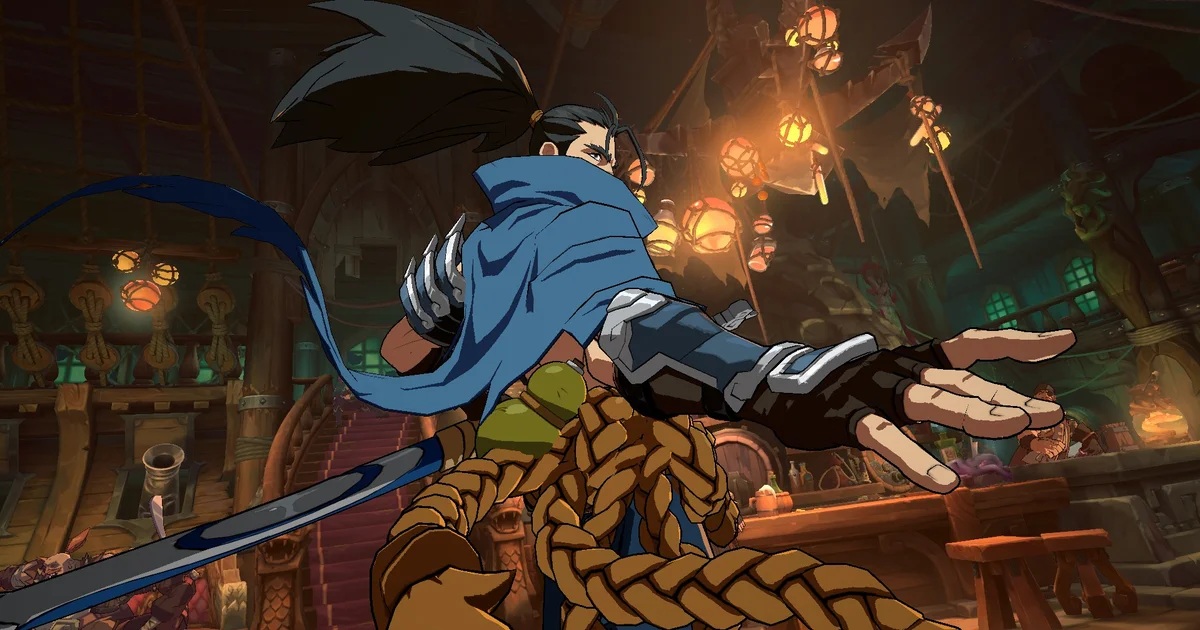
2XKO is a tag fighter that stands out from the crowd, pairing a bold visual style with a carefully crafted core gameplay loop. Familiar League of Legends characters return in a new light, presented through a genuinely stunning free-to-play offering.
A League of Legends fighting game is the sort of idea that, a decade ago, could only have been imagined by the most unfocused dreamer or the most out-of-touch scoundrel. It sits in the fantasy space of a Riot Games MMO (hold on), or maybe a League of Legends trading card game (wait a moment). Still, despite how unlikely it sounds, the game not only exists—it also delivers top-tier entertainment, even if it isn’t flawless.
2XKO is a free-to-play 2v2 tag fighter from Riot Games, the same studio behind titans such as League of Legends and Valorant. Framed as a distinctive spin on the League of Legends universe, it pulls characters from that world, turns them into fighters, and lets players compete online. You can even bring a friend along, adding a friendly, shareable angle to the usual fighting game format. And if you want to see your favorite character with a bit more attitude, this is the place to do it.
When it comes to tempo, the game lands in the middle of the pack—typically more chaotic than major staples like Tekken or Street Fighter, yet not as wildly overblown as other tag fighters, including the Marvel vs. Capcom line or many anime fighting games. A lot of attention has gone into the tag mechanics themselves, giving players—whether solo or paired—the ability to switch between characters to pull off flashy sequences. The result is a title full of quality-of-life touches, delivering an experience designed to impress both veteran genre players and newcomers who are still finding their footing.
With that in mind, it’s encouraging that the effort poured into building a deep, smooth tag system truly pays off in 2XKO. Everything feels exceptionally fluid and responsive. One character can call for an assist, another can build charge for a major strike, and then you can tag into that assist right before the hit connects—no fuss, no awkward timing, just… works. At its heart, it’s an energized reimagining, but as your skills grow, these tools expand into a surprising number of options. It’s straightforward to get into, yet demanding to fully master: that’s what great fighting game potential looks like.
Next comes the fuse system. This idea is in a league of its own, though, for context, it plays a role similar to Grooves in the Capcom vs. SNK series—team modifiers that fundamentally change how your characters operate. Depending on the fuse, you might chain powerful super moves together, broaden what you can do while swapping characters, or shift your second fighter into a more supportive function.
Still, there’s one fuse I’ve been stuck on for quite a while: Juggernaut. It wipes out the tag system entirely, replacing it with a single upgraded fighter that comes with a handful of extra benefits meant to help deal with teams built around two characters. After months of play, I can’t see much reason to pick Juggernaut, except for accommodating players who may feel intimidated by tag mechanics in a tag-focused game.
It feels like it was built for onboarding, but it also keeps players from fully experiencing the main excitement of 2XKO. It brings another issue too: balancing. If Juggernaut is too strong, it starts to feel like players using tags have to work twice as hard to land damage when Juggernaut users can get results more comfortably. If it’s too weak, it becomes completely pointless even against opponents who aren’t pros but still have access to a second character. And if Juggernaut was truly meant to be the obvious starting point for newcomers to 2XKO, the game wouldn’t set the Double Down fuse as the default choice. I’m left wishing Juggernaut simply wouldn’t exist at all.
A game like this, stripped of the tag mechanic, is significantly less captivating than a standard 2XKO match. | Image credit: Eurogamer
That’s especially true because 2XKO doesn’t skimp on accessibility options meant to help people gradually absorb its more complex layers. During character selection, you can enable easy inputs (called Pulse Combos), which removes the need for motion-style execution. For a brand-new player just starting out, the damage gap between a Pulse Combo and one performed manually is minimal. One fuse, Sidekick, lets a player hang back and support their partner, reducing damage while assisting from the sidelines—an inventive onboarding feature that gives less confident players a chance to try things with a friend, without feeling like they’re dragging the team down.
There’s also the fact that the game is free to play, which matters a great deal. It’s not the first free-to-play fighter, of course—Killer Instinct offered a free version more than a decade ago, and Brawlhalla still feels more underrated than it should for a prominent free-to-play platform fighter. Granblue Fantasy Versus’ free rotation of characters reinforced that same pattern too. Even so, 2XKO feels like the clearest example yet of the live service approach being fully embraced. A rotating selection of premium skins and seasonal battle passes back up what is, frankly, a fighting game with the same overall quality you’d expect from premium releases like Street Fighter 6 and Tekken 8.
I also think the game has an “ankle-breaker” quality—because even at intermediate levels, the tag mechanics at the core of 2XKO make the flow feel involved. Someone using the 2X Assist fuse plays their own mini-game, trying to land hits from angles that are different and harder to predict. Players running Double Down lean on one character’s super as a defensive wall, giving their second fighter a largely uninterrupted offensive run. No matter how gentle the ramp into 2XKO might seem, you’ll soon run into The Sauce.
The game features an extensive array of avatar customisation options, including occasional brand collaborations. | Image credit: Eurogamer
Now, The Sauce is absolutely fantastic, and any standout fighting game (much like any excellent lasagna) needs plenty of it. In that mix, you’ll find hours of Rocky-style self-improvement, built right into the experience. That’s part of what keeps drawing me back to fighting games, though I do worry that some characters and certain design choices could overwhelm players who are still new. Yasuo and Ekko, for instance, are packed with skill expression and can be brutally effective at showing off with aerial combos and
…outrageous mix-ups. I’ve seen Yasuo pull off feats in 2XKO that had me laughing out loud, while Ekko’s toolkit is packed with formidable moves—whether it’s his time winder projectile or Chronostrike—making him a real treat for anyone who appreciates the finer points of the genre.
I suspect the reason he and Ekko have kept that kind of power from the game’s early access launch up to today (even with nerfs coming on release day) is that, at its core, 2XKO was built around characters like Ekko and Yasuo. They were clearly developed by people who love fighting games and wanted to deliver the most intense gameplay experience possible. Even after nerfs, these characters remain dangerous unless they’re hit with heavy-handed changes, because their strength doesn’t come from raw damage—it comes from deliberate, thoughtful design.
This isn’t limited to just them. Lately, Warwick has been making waves online, overwhelming plenty of players with fast, relentless offense. Several characters are strong Zoners, designed to keep opponents at arm’s length using powerful projectiles, yet they can all turn ranged pressure into crushing combos. Blitzcrank, meanwhile, is built for players who enjoy grappling: a tough, grimy robot that can grab enemies from range and drive them into the ground for meaningful damage. Every one of these characters feels like it was made with care, and each of them brings real threat.
It’s clear that the cosmetics team has done exceptional work here. | Image credit: Eurogamer
For people already invested in fighting games, this is more than fine—it’s excellent news: those who love training mode, crunch frame data, or pore over patch notes. But what about the large group of potential players that 2XKO is trying to reach? I’m not so sure. Even though the team put effort into making 2XKO welcoming to newcomers, it’s still, fundamentally, a game aimed at fans. The concept behind 2XKO is simple: you don’t have to strip a fighting game down to be basic or empty of depth just to draw in curious new players. What you really need is to offer systems that help players engage with the parts that are harder to master. If millions can jump into complex games like League of Legends and Valorant, why can’t a fighting game like 2XKO do the same?
Time will tell, of course, but it’s obvious the 2XKO team has fully committed to this plan—and, in doing so, has skipped many of the usual comforts you’d expect from comparable releases. There’s no story mode, no arcade mode, and no other casual alternatives for a slower pace. You won’t find anything like Street Fighter 6 World Tour, and there’s no ARAM-style mode that League of Legends players might already recognize. If this choice lands, it could become a genuine entry point for countless players and highlight what makes fighting games so appealing. If Riot misjudges things, 2XKO risks turning into the most delightful rum and raisin ice cream imaginable—one that tries hard to win over fans who mainly want classic vanilla. This is a game focused on the excitement of tag fighters. As someone who’s tried, and failed, to get friends to stick with 2XKO, I still have reservations about the strategy.
What I can say is that if you do decide to stay with 2XKO, you’ll be rewarded with strong quality in nearly every area. It’s dazzling on a Saturday night, and a refreshing break from League of Legends’ more stylized fantasy. If League of Legends is like a hand-drawn illustration, then 2XKO feels like a bolder, cell-shaded take. It’s almost punk in spirit—bright, energetic, and full of moments where characters burst out from carefully built backgrounds along with plenty of VFX. I respect the team for having the nerve to chart its own course, staying faithful to the source while also making bold adjustments to beloved characters when needed. Blitzcrank is a great example: he may look dated in League of Legends, but in 2XKO he’s found new life as a sturdier brawler. Not a simple shift, but it’s handled with skill here.
One glance at Blitzcrank’s design in 2XKO made it clear to me that the character roster is in capable hands. | Image credit: Eurogamer
I just wish there were more characters, and that’s a point I’ve kept hearing since 2XKO launched early access. A starting roster of 12 is absolutely respectable. Still, because it’s a tag-based game, you end up seeing the same fighters show up again and again (particularly once the meta settles on clear favorites). Over time, that should improve, and the fuse system does a lot to mix up teams in interesting ways—but you can only run into Warwick so often before it starts to feel old.
The music in 2XKO has the same sort of situation. The game leans into a mix of electronic and metal that definitely sets it apart from other fighters. Guitars and electronic textures clash on the main menu, while character themes occasionally appear during high-stakes moments. Some of it really sticks, like Darius’ hard-hitting metal track and Blitzcrank’s more dubstep-leaning tune. Still, one quirk of 2XKO’s evolving music system is that, unfortunately, you probably won’t hear much of it for long stretches. In the future, I’d love to see a background music choice option.
The online netcode in 2XKO is genuinely impressive. I rarely ran into matches I’d call unplayable or maddeningly laggy, which speaks to the quality of the foundation Riot has built. Given that strength, it’s confusing to me that public matchmaking doesn’t include cross-region options. I can say from experience that UK–US games are solid; I played on an American account last year before early access, and the quality was truly remarkable. Since other modern fighting games let players connect across regional servers, it’s a letdown that 2XKO—especially with netcode that likely tops what those games offer—doesn’t provide this. Maybe it’s tied to the 2v2 structure of matches, or perhaps it’s a Riot server issue. Either way, it’s disappointing.
2XKO showcases beloved characters in a fresh light, one that suits them quite well. | Image credit: Riot Games
On the live service side, things are fairly balanced. You can unlock every new character as they roll out if you keep playing, and you can obtain a meaningful amount of cosmetics just by logging in and playing, rather than paying for appealing skins. The purchasable skins are likely a bit pricey, but that’s the tradeoff, and honestly, I’m more than comfortable spending around £17 on a costume I actually like.
There’s also a dedicated skinline in 2XKO that helps support grassroots tournaments around the world. Riot Games’ willingness to funnel money into the competitive scene via in-game microtransactions is a strong move—one that signals a genuine desire to back the game’s most committed players, making purchases feel less like pointless spending and more like contributing to something worthwhile.
2XKO is unquestionably an outstanding fighting game. It’s been shaped by a talented team that’s clearly passionate about the genre, with a solid grasp of what players expect from a modern release. It isn’t perfect, and it isn’t the genre’s savior that eager fans might have hoped for years ago—but for a studio’s first attempt at a genre led by long-established franchises, it’s a title that measures up to, and in some ways surpasses, them through bold new ideas. The real question now is whether 2XKO can win over enough players to stick around, and use its launch momentum to grow into a truly lasting live service fighter. Or will it slip quietly into the shadows of niche titles? I’m rooting for the former.