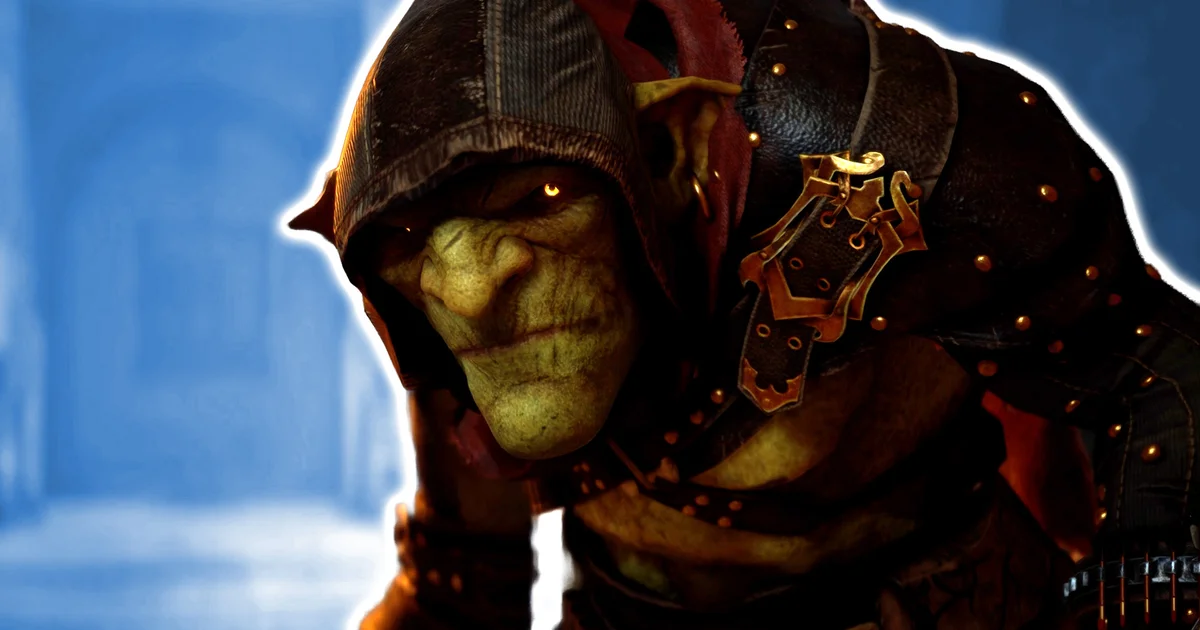
Styx: Blades of Greed might not be as flawlessly polished as a gem like quartz, yet it clearly rises above other stealth releases from recent years – so compelling that you’ll feel tempted to jump back in even after you’ve finished dull chores such as, say, going to the shops or looking after your cat.
I’m genuinely glad to meet Styx again. Not because I’m desperately itching to return to that murky, Temu-Warhammer dark-fantasy realm from the long-forgotten RPG Of Orcs and Men, mind you. Instead, Blades of Greed represents a smaller, more valuable slice of ore taken from a vein of B-tier games that used to be far more plentiful—titles that consistently deliver exactly what they promise. It really captures the high point of the “shorter games with simpler graphics” group that Bluesky users say they’re after (though, unfortunately, they rarely seem to actively chase).
That said, don’t let the lack of blockbuster-scale spending steer your expectations in the wrong direction: Styx 3 is excellent in almost every respect. You start just moments after the tense end of 2017’s Shards of Darkness, and this new installment adds a touch of Mass Effect to the formula. The goblin at the center of it all collects a crew of misfits—outlaws, runaways, and oddballs—aboard a drifting ship belonging to thieves. The mission? To obtain shards of quartz, a strange magical substance that acts as a crucial energy supply for a hostile human empire and its Inquisition. That Inquisition is led by a ruthless wizard gestapo-style force, bent on wiping out non-human peoples, and not exactly renowned for kindness toward humans either.
Stealing quartz shards from different areas throws a wrench into human life and keeps you from ending up in the Inquisition’s clutches. Still, the bigger takeaway is how smoothly it lets the story use RPG-lite character growth. Styx behaves like a complete addict, forever chasing his next dose of quartz—because when he absorbs it, he gains magic. Those quartz-powered abilities, along with your basic goblin talents and a lineup of Batman-like gadgets, are organized through skill trees. It’s a bit like the way a strong heroin dependency can somehow make someone astonishingly skilled at snatching car radios.
And that idea works well as the game’s central metaphor: in terms of world-building, the Styx story is anchored by a hunger-driven, destructive empire fueled by the addiction to conquest. At a more detached, meta level, the game itself is incredibly engaging. It’s like a Pringles can filled with tasks that nudge you into carefully sneaking, stabbing, and stealing—somehow making it more habit-forming than the Iberian Peninsula.
It’s a fascinating setup for a title with ambitions that stretch beyond a basic level design. Marketed proudly as a true Metroidvania, Styx 3 plays across three wide, distinct environments, with the vital quartz shards scattered throughout. Wall is your main hub: a place previously seen in Of Orcs and Men, where the continent is divided between those races and styled like a sprawling, disorderly blend of Hadrian’s Wall, the old London Bridge, and the Burj Khalifa. The result is a stunning but chaotic maze of rules-bending architecture, medieval bustle, and absurd heights.
The second key region is Turquoise Dawn, a tangled alien jungle that mixes an Orcish tree-city with a wood-crafted Imperial outpost. It’s a visual delight and, just as importantly, it feels different from The Wall—both in look and in layout. Here, you’re much more likely to meet your end by accident or through misfortune, rather than long, drawn-out fights. Finally, there’s Akenash, the decayed tower: the original setting from the first Styx game, reshaped into a twisted, post-apocalyptic landscape teeming with magical monstrosities and wandering Dark Elves who hunt for relics.

Akenash stands out particularly if you remember 2014’s Styx: Master of Shadows, which I covered long ago and revisited just a few weeks before this release. It’s a strong illustration of a great benefit that sequels can offer: the chance to return to familiar territory, but with everything reshaped by time (or by magical catastrophe). The Akenash in Blades of Greed is unmistakably a post-disaster reworking of the original levels, now shown from angles that weren’t accessible before. That’s enabled by a chain of floating islands and Styx’s growing toolkit of unlockable traversal options, which are introduced gradually across the narrative—helping deliver on the Metroidvania side of this delightful genre blend. Batman’s grappling hook, Link’s glider, Corvo’s blink… a little bit of everything is brought together to give Styx more and more ways to reach increasingly larger stretches of each map, unfolding with the kind of graceful, deliberate pacing you’d expect from something like an origami chicken.
A fixed number of quartz shards has to be collected before you can move from one act to the next. That shifts what would usually be a side task in a newer Assassin’s Creed entry into the spotlight: this isn’t a game about hunting down markers. Instead, it’s a tightly focused checklist—yet it leaves an impressive amount of room for you to decide how to tackle it. Throughout the game, I kept spotting different ways to get around particular obstacles. Some sections can even be skipped completely if you head off the main path and frequently make use of your “amber vision” (a detective mode that runs on amber, a liquid macguffin from the first game that’s also used like a type of drug; Styx is, naturally, quite the addict).
There are five story acts overall, with linear set-piece stretches placed between them. Those sequences are designed to highlight the latest traversal capability you’ve just unlocked, while also letting the game show off distinctive, one-off spaces as little windows into the wider world. Thankfully, this isn’t a full-on change into an open-world structure for the series. Its instanced, linear method of expanding and then pulling back the scope at key moments keeps it interesting, and it also helps the world feel bigger than a typical open world often manages.
Where the game doesn’t quite land is in the cutscenes. Even though they’re needed to push the story forward, they frequently feel painfully underwhelming—partly because of frustrating technical constraints that have followed the Unreal Engine since the Xbox 360
era to varying extents, but primarily because the voice acting is roughly 50 percent dreadful. Much of the delivery feels workable yet stripped of charisma and polish, as though the performer would read the lines in the same flat manner every time, no matter the moment. A sizeable chunk of it is outright miserable—poorly matched, clunky, and delivered with the same awkward confidence as the typical school play. Add…
On top of that, the whole thing has a distinctly unreal quality: that engine’s odd obstacle with camera transitions (why does the game rebuild the entire scene from scratch whenever we change viewpoints? Why?!), audio cues that fire off in wildly unsuitable moments, and a handful of smaller annoyances.
Luckily, the cutscenes make up only a small slice of the overall experience; after all, this isn’t Metal Gear. When it comes to straightforward play, Blades of Greed genuinely shines. Its movement is a blast, letting you span large stretches with nerve-jangling stunts and nimble acrobatics—everything from seemingly impossible ledge grabs to catching air currents that carry you partway toward the skybox and then back again. And when you move through close-quarters areas in stealth, slipping under tables, scaling walls, and sliding through drains, you take advantage of every opening to set up a stealth takedown or a fast grab. Styx’s magical skills bring plenty of variety, and they often deliver that sharp hit of dopamine that comes from outthinking your foes. The excitement of staging the perfect heist—loosening a chandelier safely here, stirring up a distraction there, turning a mind-controlled armoured guard into his own undoing, why not? It’s only amber.
Still, many of Styx’s most thrilling moments happen when you don’t have amber left to spend. When you can’t simply Derren Brown your way out of a bind. When you’re unable to conjure a clone to pull a lever while you stay tucked away in the rafters. Resources are scarce enough that you often can’t rely on gadgets or special techniques—you have to improvise around guards with the basic methods that were there even before you launched the game: hiding, observing, patience, and timing. With those fundamentals alone, you can survive every scrape and solve every puzzle. But any misstep that turns into open confrontation spells doom. That’s what makes Styx 3 an honest-to-goodness stealth game: a real stealth game that sets it apart from franchise drift, the kind that has, for example, pushed Assassin’s Creed into a straight-up action RPG, where the ideals of silence and shadow get plenty of lip service but end up being optional in practice.
That’s not what’s happening here. For players who genuinely prefer stealth over head-on clashes, Blades of Greed delivers the real deal. Even with a move toward a more open-world approach, it—whether by clever restrictions or simple budget limits—has managed to avoid the pull to pad things out with unnecessary filler. Like the goblin at the center of it all, Styx 3 stays sharp and lean. It’s also nailed the formula: earlier Styx entries leaned too hard on reusing environments, which often led to a cramped-feeling atmosphere and slowed the sense of momentum. With its Metroidvania structure, Blades of Greed creates spaces you actually want to return to. And I’ll go even further—once the set pieces and story cutscenes wrap up, it’s genuinely enjoyable to come back.
So the takeaway is clear: not only is this the best Styx game by a wide margin, it’s also the best stealth game we’ve had in years. Styx, you foul, grubby little scamp—I didn’t realize how badly I needed your comeback. Please don’t make us wait another decade next time.
A copy of Styx: Blades of Greed was supplied for this review by Nacon.