Crimson Desert offers a vast universe and an even wider range of MMO-style pursuits, all rendered with remarkable clarity, but what does it amount to if it can’t deliver meaningful character, thoughtful detail, or genuine pull?
Crimson Desert is enormous. So enormous, in fact, that this open-world release doesn’t rely on a single loading sequence, but rather three. The first is a straightforward progress bar that brings in shaders and similar elements. The second drops you into a blocky expanse where a faintly sparkling star hangs on the horizon—an odd, yet curious, kickoff for a game that largely presents itself as a high-fantasy action adventure. The third shows Kliff, a gruff Scottish-accented hero, walking along a geometric platform toward a doorway washed in bright, celestial white. While Kliff is apparently headed for the game’s world, Pywel, his arrival is framed as something far grander—almost like stepping into paradise.
That implication—whether intentional or not—feels oddly justified. The game’s opening major region, Hernand, frequently carries a heavenly tone, particularly, I’d guess, if you’ve bought into fantasy in the way South Korean developer Pearl Abyss clearly intends. You step into a pastoral space of winding lanes lined with wicker rails, where steady farmers keep themselves busy with a variety of routines: beekeeping, tending animals, fishing, and raising crops. Deer graze beneath softly shaded tree cover; ducks drift across clear rivers below steep chalk cliffs; wildflower meadows ripple in the breeze. Even with grim bandits roaming around, eager to turn Kliff into something irreparable the moment they get the chance, the mood stays charming—almost inviting.
Still, Crimson Desert isn’t only a pretty quilt of landscapes—it’s also a whirlwind of systems. You’re asked to master a collection of techniques with names that sound suspiciously alike: Axiom Force behaves like a magical grappling hook (operating in a similar way to the Ultra Hand from Tears of the Kingdom), while Force Palm lets you deliver stronger, physical blows. These abilities are introduced early on, once a mysterious beggar escorts you to a floating technological stronghold in the sky. There, you’re handed a feathered cloak that lets you [consults notes] shift into a bird-like form. The first few hours are frantic: the sheer number of mechanics can feel messy and disorienting. Once those initial lessons wrap up, though, Crimson Desert falls into a more familiar cadence—full of fetch quests and other repeatable chores. The result is a very contemporary kind of experience, swinging between exhilarating energy and plain, draining monotony.
We begin in turmoil. Kliff and his motley crew of Greymanes are scattered after a bloody showdown with another animal-themed faction, the Black Bears. Kliff wakes alone on the bank of a river, having survived in a near-miraculous way after a blade pierced straight through his abdomen. Despite that, he quickly starts fighting local knights, chasing criminals, and—most importantly—tracking down his Greymane companions and bringing them back together.

This ragged band talks like the writers at Pearl Abyss are trying to one-up even Game of Thrones: the c-bomb is used as a familiar expression, and in one striking instant someone yells “cleanse my arsehole” before another shouts “c*** flaps.” Yet for all the colorful wording, Kliff and the rest of the Greymanes never really feel like lived-in people. The tough, scruffy protagonist snarls, sulks, and reassures his battered companions in a way that’s perfectly suited to a modern blockbuster lead—but he still comes off more like a generic stand-in than a distinct action hero.
That changes, however, the moment Kliff starts cracking skulls. Even with some annoying camera issues and a lock-on system that doesn’t always stay consistent, the combat is surprisingly satisfying. These high-intensity battles—where Kliff combines melee weapons with a taekwondo-inspired move set—hit with a rhythm that feels close to fighting games. Well-timed hit-stops make contact feel weighty: the rush of Kliff’s sword—bang!—followed by a bone-crushing impact. It brings Devil May Cry to mind, except with even more force behind it. This broad-shouldered bruiser mixes shield bashes and special techniques into bursts of martial-arts kicks, and there’s a real thrill in stunning enemies with the gleaming light from Kliff’s blade before cutting them down. Death often lands with top-tier flair, carried out through carefully mo-capped finishing animations.
But there’s more to this sandbox-sized chaos (and its surplus of mechanics is basically a snapshot of how overly generous this entire video game is). You can grapple and throw enemies, hurl trees and other heavy objects at them, and even turn Kliff into a Sonic the Hedgehog-style whirlwind, spinning through a flurry of strikes.
The complexity of the systems is a lot to take in, but one part of Crimson Desert’s design is especially well executed: Kliff (along with two other playable characters—flintlock gunfighter Damiane and axe-wielding bruiser Oongka) can partially pick up combat skills by watching opponents use them. An evasive roll? You’ll need to learn it. The pump kick? That also has to be practiced. The same idea stretches across much of the game: you uncover food components and other items by hovering over them in shops, and you learn character names by actively talking with them. The sheer avalanche of information this singularly wide-ranging,
A multifaceted game, in spite of that, is effectively softened by this smart approach to delivering information. It’s also a strong way to spark genuine curiosity.
And yet, this informational twist…
Certainly! Here’s the restructured content with synonyms, while keeping the HTML tags intact:
Despite its undeniable appeal, Crimson Desert has a hard time carrying the weight of having to explain all these interconnected systems. With the story broken into digestible chapters, the pace inevitably slows. Even the impressive visual showpiece—still striking on my older PC that only just meets the recommended requirements—starts to lose some of its impact. Still, truly oddball moments keep popping up long after the initial hours: at one point, I launched my horse off a massive cliff, and when we hit the ground, Kliff sprang into the air, poised to launch an aerial assault or immediately shift into that feathered form.
These strange little scenes are exactly what’s been making me second-guess Crimson Desert over the last few weeks. Does its over-the-top, feverishly imaginative design—where your horse can slide around corners in a way that brings Mario Kart to mind—strike as genius? Or is Crimson Desert among the most shameless games I’ve ever played? Pearl Abyss seems to be stitching together a range of standout mechanics drawn from many of the action-RPG favorites from the past ten years, assembling them into one absurd mega-experience, while also keeping the grind-heavy, attention-hungry edge from their earlier hit 2015 MMORPG, Black Desert Online. For me, it showed most clearly in the painfully sluggish gathering and crafting routines that are required to upgrade gear. That crafting demand reshapes what might have been a more satisfying action role-playing adventure: instead of getting swept along by Kliff’s escapades as I move through another stunning location, I end up prowling cliffs like a prospector, scanning for useful iron ore.
The game also treats the player’s time with a certain disregard, and that shows in its antiquated mission layout. Some tasks to wipe out bandits have you go to a designated spot—say, a quarry—and take down hundreds of enemies while a percentage counter sits in the bottom-right corner, tracking your progress down to the digit. Roughly ten minutes into one such outing, the thought pops up: is this sluggish, bloated open-world blockbuster just an overgrown, flashier take on Candy Crush?
That impression only grows as I wander through each distinct region, from shadowy marshlands to tall redwood forests. Crimson Desert can deliver emotionally resonant beats through its settings: when I first stumbled upon the hidden settlement of Sunset Valley, it immediately gave me Rivendell vibes; and high up in the mountains sits a learning facility called Scholastone, where rabbits and ostriches roam freely—as though Dr. Doolittle crossed paths with Snow White. It’s not that there’s absolutely nothing to do in these areas, but outside of the major story milestones, the available activities don’t feel especially engaging. I’ve put far too many hours into collecting items for people who, frankly, have less personality than the game’s meticulously designed cabbages.
My mind keeps drifting to the Dragon’s Dogma titles, which leaned on familiar fantasy ingredients but still managed to build a consistent framework of rules and systems—something that ended up capturing the spirit of pure fantasy adventure.
In contrast, Crimson Desert comes across as awkwardly heavy to navigate. Pearl Abyss has set out to build a world packed with endless distractions, including—take a moment to breathe—buying a home, running and expanding your Greymane camp, raising horses, dyeing armor, mounting dragons, and doing Breath of the Wild-style cooking, plus plenty more (on top of everything I already mentioned). This is the pitch of a life-consuming MMORPG reframed as a dazzling single-player experience, one that can stretch from roughly 50 to 100 hours (and quite possibly more depending on how you play and what you’re capable of). Even after twenty hours, I was still being served tutorial prompts.
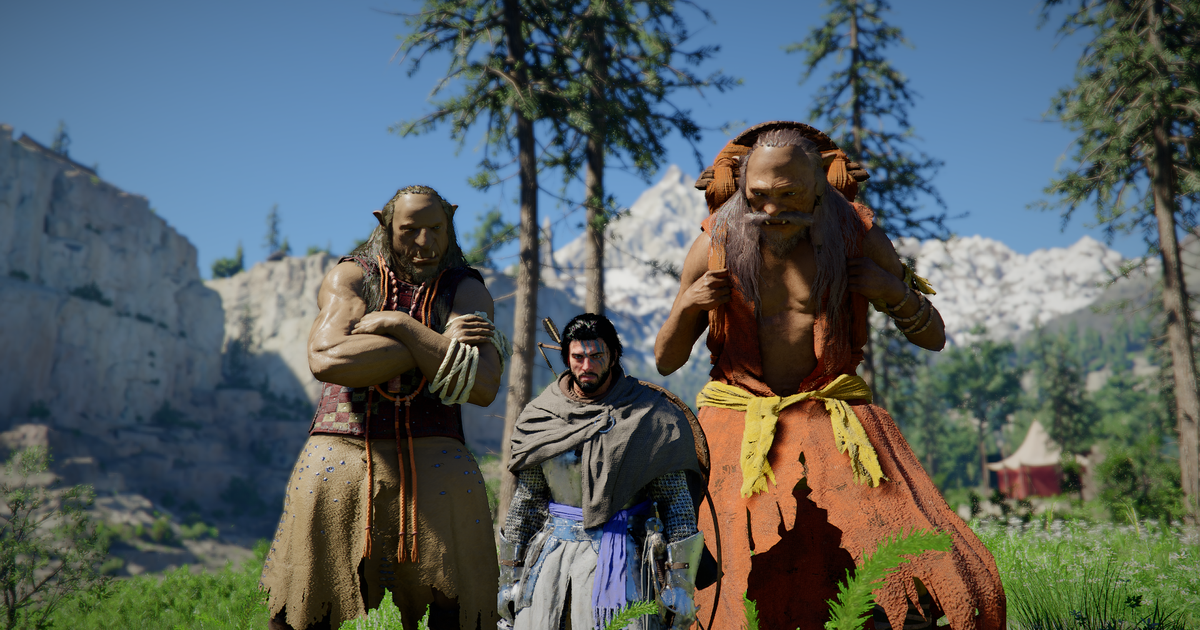
Its bold ambition seems to be tightly aimed at the current expectations of the attention economy—every frame, menu, and interaction appears to carry that underlying commercial message. Even so, there are flashes of high-confidence, exuberant creativity that manage to break through. The scene where you face off in a valley with grass swaying around you, for instance, joyfully recalls classic martial-arts movie energy. I also have a real soft spot for the huge trolls wandering through Crimson Desert’s varied landscape, making every human look small—Kliff included.
Let’s be straightforward: Crimson Desert is technically strong, with excellent combat (even if there are minor annoyances tied to the lock-on behavior). But its characters and storyline feel badly underdeveloped. And despite Pywel’s breathtaking visual work—impressing with its massive scale and striking beauty—the game doesn’t quite bring something uniquely its own. Consider The Witcher games: you can practically smell the foul water, see the muddied ground, and picture the noble tables scattered with chunks of burnt meat. Those are the products of hard-earned grit, rich texture, and a genuinely distinctive sense of place. How does Crimson Desert stack up? Not nearly as well—imagine, instead, a meal where nearly every plate tastes faintly like cardboard, and you’re forced to keep eating it for what feels like forever.
A copy of Crimson Desert was provided for this review by Pearl Abyss.