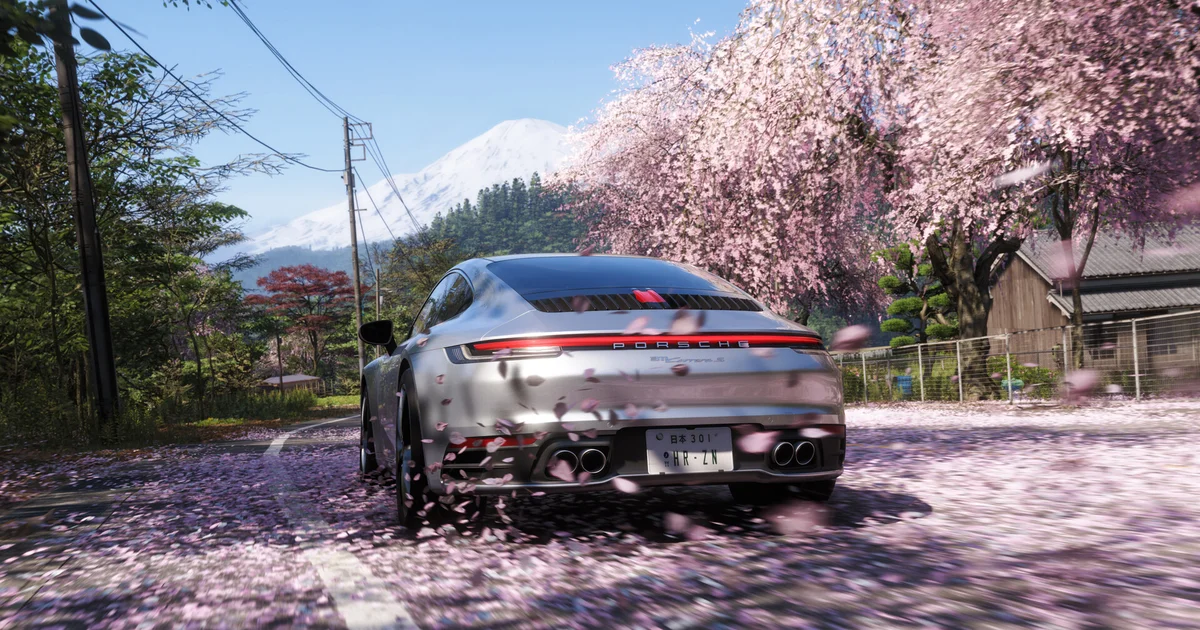
Playground Games has struck gold again: Forza Horizon 6 benefits from a rare blend of an expert instructor’s mindset and a tour guide’s polish, drawing on 14 years of franchise lessons and delivering them with flair.
Forza Horizon 6 doesn’t try to reinvent the wheel. It doesn’t need to. This newest open-world racing heavyweight from Playground Games instead takes another look at the five earlier entries, trimming what feels unnecessary and bringing the best ideas back to the front—aiming to make Forza Horizon 6 the smoothest, most lively, and most compelling ride possible. That all plays out across a stunning Japanese setting, backed by decades of carefully researched Japanese automotive culture. I genuinely think Horizon 6 represents the peak of an already outstanding set of racing games, and it spotlights Playground Games at what feels like its highest craft level. This may be the strongest racing series in gaming, though that praise does come with a few caveats.
Let’s tackle the hardest sticking point first: progression. Building a satisfying feeling of growth in an open-world racer is no easy task. Part of what the Horizon series sells is that you’re handed a sandbox packed with different kinds of challenges—so you can tackle them on your own schedule. Want to ignore Japanese road safety rules and go for three stars in a ‘Speed Camera challenge?’ Or would you rather drive up to the northern stretches of Hokkaido and put your snow tires through their paces in a cross-country slalom against 15 other rivals? Prefer to cruise past Akeno’s sunflower fields, track down collectible XP boards, and smashable mascots, or take a legendary Nissan Skyline GT-R into Tokyo and drift through some electrifying set pieces? You can pick what you want, whenever you want… sort of.
One of Playground’s smartest calls in Horizon 6 is bringing back the Wristband system from the first Horizon game (set in Colorado). There are seven levels of access, with each colored wristband unlocking new opportunities, until you eventually reach the prized ‘access all areas’ Gold band. I really respect how this has been handled: as soon as you earn new Wristbands, you’re able to join races with higher vehicle class restrictions. Areas you’ve already spent time in don’t stay empty, either—they get topped up with fresh races and objectives. And as your skill rises, Playground starts rolling out more Road, Dirt, and Cross Country events for you to tackle. Every task carries its own car theme, and some are far tougher to land a podium in than others.
By taking wins, finishing races, snapping photos of highlighted cars, and just generally showing up as a proper festival regular, you’ll earn recognition that pushes you closer to the next wristband. When you’ve met the requirements, you can jump into a Showcase event—those stunning, breath-catching moments that, six games in!—still manage to leave me impressed. I’ll let you discover most of them yourself, but I have to stress one in particular: the ‘mech race’. Forza Horizon 5’s Mexican adventure had you challenging yourself against daredevils in wingsuits, blasting down canyons, or taking on aircraft that carried personnel, and I assumed it would be difficult to top. Yet with 6 set in Japan, I probably should have expected mechs or anime-style nods. And this showcase absolutely delivers. It’s ridiculous, it’s unrealistic, it’s simply and genuinely great fun. The only drawback to these big moments is the Horizon hosts—those influencer-style personalities known for nonstop, drifting chatter. Still, you can switch off all NPC dialogue in the settings. You’ll thank me later.

Alongside the Wristbands, there’s the ‘Discover Japan’ progression track—a lightly disguised nod to the Japanese Tourist Board that’s designed to encourage you to explore every corner of the island nation to unlock further activities. Progress on this track is logged with stamps, and you build points for your next stamp by collecting and tuning vehicles, photographing murals, smashing mascots, and also seeking out landmarks, taking part in day trips, completing Street and Touge Races, or—pay attention here, Death Stranding—signing up for a part-time food delivery task. Yes, really.
To help offset everything you’ll spend time racing for in both drag strips and street circuits, one of Horizon 6’s fresh additions is a part-time job. These missions don’t meaningfully expand the core experience, but if the idea of maneuvering through sharp turns and cramped lanes in a miniature Tokyo sounds appealing, then the whole world is yours to enjoy. Frankly, I felt these missions were the weakest moments in the entire game. Still, that’s part of the charm of Horizon: I completed around four of them and never returned, because I didn’t have to. Lucky for us, player choice matters. Playground has been carefully balancing structure and freedom since Horizon 3, but here—thanks to the map’s huge size and the sheer number of activities—it genuinely feels like you’re steering the experience. The way the two progression tracks surface content is nothing short of excellent. You rarely get the sense of an invisible hand nudging you or telling you what to do at every turn.
Because the driving system that supports everything the game offers is excellent, there were a few kinds of races I was hesitant to jump into as well: ‘dirt races’ run across muddy stretches are reliably irritating, ultra high-spec sports car races on slick surfaces don’t end up being that much fun, and some of the tasks involved in moving from tarmac to dirt and…
Coming back to all of this again is a bit much for my brain and hands to juggle. I usually play at Above Average, though now and then I get reminders to scale down to Novice (bold choice!) or push up to Highly Skilled (thanks!). The mix of race formats is genuinely impressive; in earlier Horizon releases, I stuck to one skill level across the whole experience. Here, the labels and categories shift dramatically, so it feels as if you’re being walked through each badge level step by step.
My earlier comment about the standard driving model above isn’t entirely fair, in my opinion. Horizon’s approach to racing simulation may never dive as deeply as Gran Turismo or its related series, Forza Motorsport, but it works well enough for a wide-open adventure such as Horizon. I’m not a racing-game specialist. I don’t have that ambition. Still, spending time in the Horizon series has given me enough know-how to enjoy the story mode and regularly land on the podium in most online meetups I join. It’s also a credit to the physics engine that it can handle everything from road events and dirt-track contests to snow slaloms, beach routes, and more—while also dealing with the complexity of 671 different vehicles.
For years, Horizon has been viewed as much a collection-focused experience as it is a racing game, and that’s just as true in Horizon 6. Early on, I grew attached to a 1992 Ford Escort RS Cosworth, a well-known and genuinely attractive World Rally Championship (WRC) entry with the highly recognizable ‘whale tail’ spoiler. Because of that, I went into the tuning and upgrades area of the menu—something I previously avoided, largely due to the intimidating menus (and yes, they’ve improved a lot since the Horizon 4 days). With the Series X’s SSD and its rapid loading, tweaking settings, returning to the garage, dialing everything in again, and then testing the results is straightforward. Messing around like this would have taken days on the PS3 and Gran Turismo 5.
Since I played it before release, I didn’t get to see the servers packed with festival-goers the way regular customers will, but I did get to trade occasional races with other members of the media and, in particular, with developers from Playground and Turn10. At times I even managed to beat some of them! Otherwise, most of my races were against the developers’ ‘Drivatars’—often forceful opponents, but still a fun way to test my skills in modes where I felt fairly confident. When other players end up in your path, you can tell the multiplayer is running cleanly with reliable netcode (not always a given across Forza games), and the smooth shift from watching a real player on the roads to jumping into stunt meetups or heading together to the race starting points always feels magical to me. The original Horizon idea came from Turn10 director Dan Greenawalt and his experiences at Coachella—so that festival energy is alive and well. Six entries on, I’m able to build new friendships on Kanto roads through quiet interactions, much like connecting with people while waiting for the portaloo at Primavera.
Forza Horizon sits right between simulation and arcade. Along the way there were a few bumps where the balance tipped too far to one side or the other, but here in Japan, Playground Games has the grip, the drive, and the confidence to push through to the finish quickly—while handling every corner and running every line properly. This is Forza Horizon at its strongest: something that appeals to a wide audience while still satisfying more specialized tastes, boosting the overall fun while also sharpening its most complex systems. The move to a Japanese setting arrived at exactly the right time; it’s a remarkable match for an already outstanding game. It’s taken 14 years to get here, but I think Forza Horizon 6 delivers on what the first game promised back in October 2012.
A copy of Forza Horizon 6 was provided for this review by Xbox Game Studios.